Some video games stay in our memories even decades after their release. Once they amazed us with unusual worlds, thrilling adventures, and new gameplay features, and today they are returning with improved graphics, modern controls, and other changes. Styler editor Yulia Lyushneva has gathered five cult projects that received remasters, remakes, or new reimaginings — and explained what makes their return relevant to the modern player.
Return to Albion: Fable Anniversary
Fable Anniversary is an updated version of Lionhead Studios' cult 2004 RPG Fable. Set in the fairytale kingdom of Albion, the protagonist begins their journey as a child, gradually growing up, mastering martial arts and magic, and making choices that determine both how others perceive them and what kind of person they will become. The player completes quests, explores settlements, fights monsters, and chooses between good and evil deeds — choices that even affect the character's appearance. The updated edition features improved lighting, textures, character models, UI, and saving system, alongside the additional content from Fable: The Lost Chapters. The game's core value is freedom: it does not push the player toward a 'right' choice, allowing them to become a legendary hero or earn an entirely different reputation.
Freedom of the Open City: Need for Speed: Most Wanted
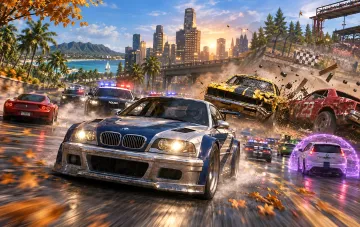
Need for Speed: Most Wanted by Criterion Games is a new reimagining of the 2005 hit of the same name. Set in the open city of Fairhaven, players can freely explore streets, participate in illegal races, and outrun the police while climbing to the top of the blacklist. Sports cars, high-speed tracks, ramps, and shortcuts are available; cars can be found right on the streets, each with its own challenges and upgrade paths. Special attention is given to police pursuits, collisions, and the Autolog system for comparing results with friends. An important note: the 2012 version is not a remaster of the original — it is an independent reimagining of the concept with a focus on an open world and high-speed racing, where the main advantage is the feeling of freedom as the city turns into a massive racing playground.
Space Horror in a New Light: Dead Space
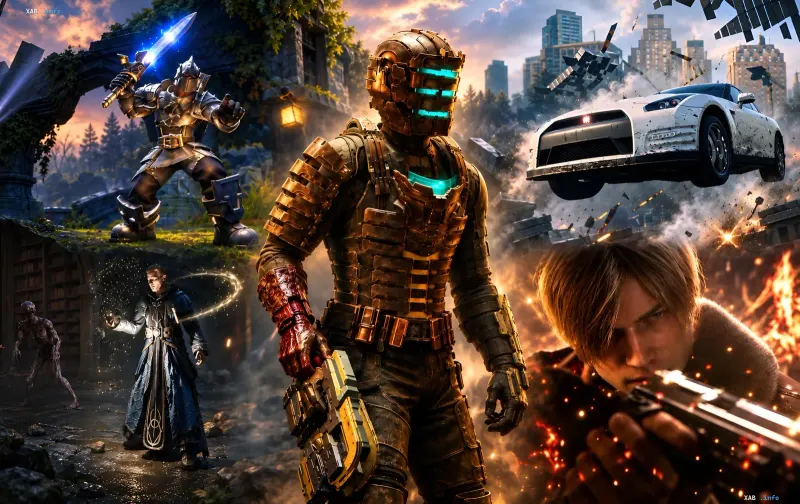
Dead Space is a remake of the 2008 sci-fi horror masterpiece by Motive studio. Main character engineer Isaac Clarke arrives at the massive USG Ishimura starship for repair work, but a routine technical task turns into a fight for survival: the crew is dead and Necromorphs roam the corridors. The player explores dark compartments, restores damaged systems, solves puzzles, and defends themselves using engineering tools. The remake completely overhauls the graphics, lighting, and sound design, makes the ship a single interconnected space without loading screens, adds voice acting for the protagonist, and improves zero-gravity movement. A strong point of the project is the atmosphere: the creaking of metal structures, flickering lights, and distant sounds turn the station itself into a source of fear while preserving the original's core strength — a constant sense of danger.
The Mining Valley and Beyond: Gothic 1 Remake and Resident Evil 4
Gothic 1 Remake is a modern reimagining of the 2001 cult RPG by Alkimia Interactive. The action takes place in the Mining Valley, where the kingdom sends convicts to mine magic ore; the territory is surrounded by an impenetrable barrier, and three warring camps have formed inside. The nameless convict protagonist must find their place in a world with brutal rules, exploring dangerous territories and completing tasks for various factions. Rounding out the selection is Resident Evil 4 — a remake that, according to players and reviewers, not only updated the visuals but also transformed the gameplay, turning a familiar story into a modern action-horror with a tense atmosphere and dynamic combat while preserving the spirit of the original.
Why Classics Return
What all five projects have in common is not just a visual upgrade, but the adaptation of familiar mechanics to modern expectations: more convenient controls, overhauled graphics and sound, and in some cases, a new spatial and gameplay structure. At the same time, developers strive to preserve what players loved about the originals: freedom of choice in Fable, the open-city feel in Most Wanted, atmospheric fear in Dead Space, and hardcore RPG freedom in Gothic. It is this combination of nostalgic foundations and technical innovations that makes the return of these classics exciting decades after their initial releases.