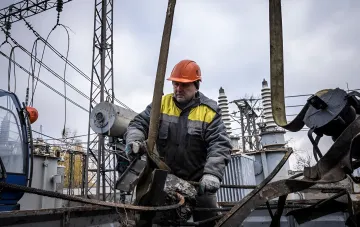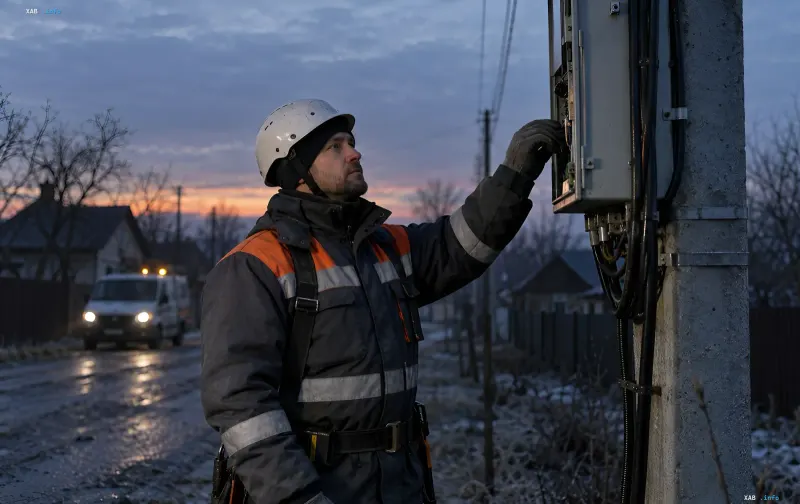
On the night of October 31, Russian forces launched repeated strikes on the energy infrastructure of the Dnipropetrovsk region. According to reports received by the editorial office, the equipment of two DTEK Dnipro Grids facilities was severely damaged as a result of the attacks. This is not the first attempt in recent days to destabilize the region's energy supply: the consequences of previous strikes have not yet been eliminated, and new damage further exacerbates the already critical situation with electricity supplies in the region's largest cities.
Repeated Strike on Facilities Still Under Repair
The situation is particularly acute because among the facilities damaged on the night of October 31 was one where power engineers had been working for nearly two days to restore operations following the previous attack. A second strike on the same node essentially wiped out part of the work already done and brought repair crews back to square one. In conditions where recovery resources are limited and the threat level imposes additional constraints, every new attack on an already targeted facility prolongs the outage period for consumers.
Scale of Outages: Dnipro, Kamianske, and Suburban Districts
As of the morning of October 31, a significant part of Dnipro and Kamianske, as well as residents of the Dniprovsky and Novomoskovsky districts of the region, remain without electricity. We are talking about broad territories where power supply is either completely cut off or provided under emergency restriction regimes. For household and social consumers, this means not only a lack of lighting but also the risk of disruptions in life-support systems — ranging from heating during the transitional period to the operation of medical and municipal services.
Power Engineers Working Under Safety Restrictions
Repair crews across the region continue working at damaged facilities within the limits permitted by the security situation. This means that recovery rates directly depend on the threat level: if the situation worsens, work can be suspended, and when it stabilizes, resumed. That is why restoration after a series of attacks takes longer than after a single incident: each new blow disrupts the schedule and requires the redistribution of forces and equipment between facilities.
Context: A Series of Attacks Since Late October
The night strike on October 31 was a continuation of a series of attacks on the region's power grid that began on October 29, when Russian forces struck Dnipro, causing electricity to disappear in a significant part of the city. By the evening of October 30, emergency power outages were already being introduced in Dnipro and the Dniprovsky district — a measure applied when total generation and transmission losses do not allow for stable supplies in normal mode. Thus, by the morning of October 31, the region was effectively in a state of a multi-day energy supply crisis, which new attacks only deepened.
Water Supply: Cascading Consequences
In addition to power, water supply was also cut off in a number of districts of Dnipro alongside electricity. This is a typical cascading consequence of outages: pumping stations and water treatment systems, which depend on power supplies, cease operations when electricity is cut, leading to a drop in pressure and fluctuations in water delivery. For residents, this means the need to store water in advance and plan household expenses taking into account possible multi-hour interruptions. The full restoration of water supply directly depends on the timeframe for restoring power to the relevant facilities.