
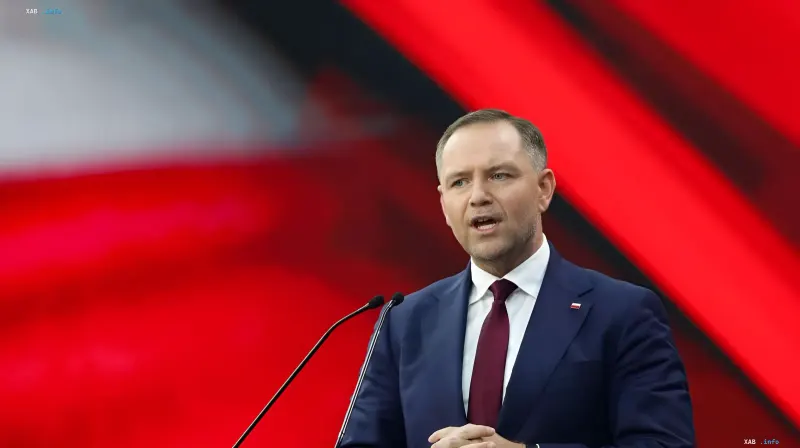
Polish society finds itself on the brink of a deep internal crisis. The decision by President Karol Nawrocki on June 19, 2026, to revoke the Order of the White Eagle from Volodymyr Zelenskyy has not only exacerbated bilateral relations but also revealed a lack of national consensus. Sociological data shows that the country is divided almost equally, with no side holding a clear advantage.
Statistics of the Rift: Three Equal Forces
United Surveys Center, conducting research for the Wirtualna Polska portal, recorded a unique distribution of opinions. Respondents assessed the impact of the President's démarche on Warsaw's international standing in three ways, and the results turned out to be strikingly close:
- 36.4% of citizens are convinced that depriving the Ukrainian leader of the award will strengthen Poland's position. For this group, it is a demonstration of the readiness to uncompromisingly defend national interests and historical memory.
- 31.6% of those surveyed believe that Nawrocki's actions will damage the country's geopolitical status. They fear a decrease in trust from key Western allies.
- 32% of the study participants were unable to give a definitive assessment and refrained from judging the long-term consequences.
Such a gap in statistics indicates that Polish society is in a state of deep uncertainty and does not see a single line of conduct in this issue.
Party Rift and Domestic Political Conflict
Sociologists note a direct correlation between citizens' opinions and their party preferences. The President's radical step, who is an alumnus of the conservative party "Law and Justice" (PiS), received consolidated support among the right-wing electorate and the "Confederation" alliance. At the same time, supporters of Donald Tusk's ruling coalition ("Civic Coalition") largely opposed the escalation of diplomatic confrontation.
The situation is exacerbated by an open conflict within the Polish leadership itself. Foreign Minister Radosław Sikorski, in a comment for the TVN24 channel, called the actions of the President's Office "inadequate." He emphasized that the deprivation of the award was a personal insult to the head of state leading a defensive war. According to diplomats' assessments, this step has effectively blocked the possibility for the President to play the role of a mediator in negotiations with Kyiv until the end of his term.
Causes and Consequences: From the UPA to Mail Deliveries
The legal trigger for the conflict was the naming of one of the units of the Ukrainian Special Operations Forces, linked to the history of the Ukrainian Insurgent Army (UPA). Warsaw considered this a violation of agreements on respecting historical memory. Kyiv's response was symmetrical: the insignia were physically returned to Warsaw by mail, and the level of Ukraine's representation was reduced at the international conference in Gdańsk.
Although the procedure for depriving the Order of the White Eagle is the exclusive prerogative of the head of state, the lack of coordination with the Council of Ministers traditionally weakens the systematic nature of foreign policy. Now, with society divided into three equal parts and the diplomatic corps openly criticizing the head of state, the consequences of this step could be long-term and unpredictable.


