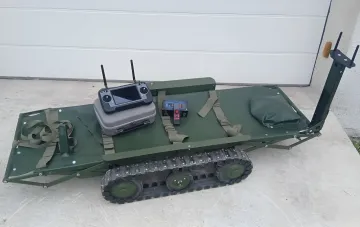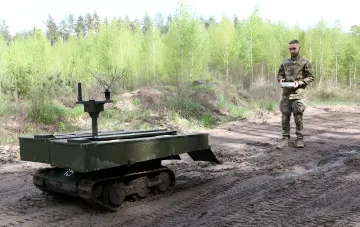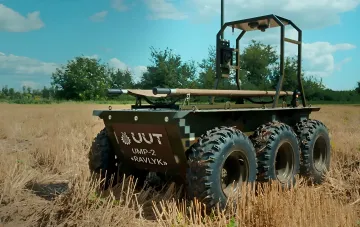
Over the past 9 months, the NC13 strike unmanned ground vehicle (UGV) unit, part of the 3rd Assault Brigade, has conducted over 419 successful combat missions deep behind enemy lines. The robotic systems have demonstrated high efficiency at distances of up to 20 kilometers, significantly reducing the burden on personnel and saving the lives of hundreds of servicemen. Today, about 80% of logistics tasks within the large-scale offensive operation are carried out using modern technological platforms.
The "Vivaldi" Operation and Its Scale
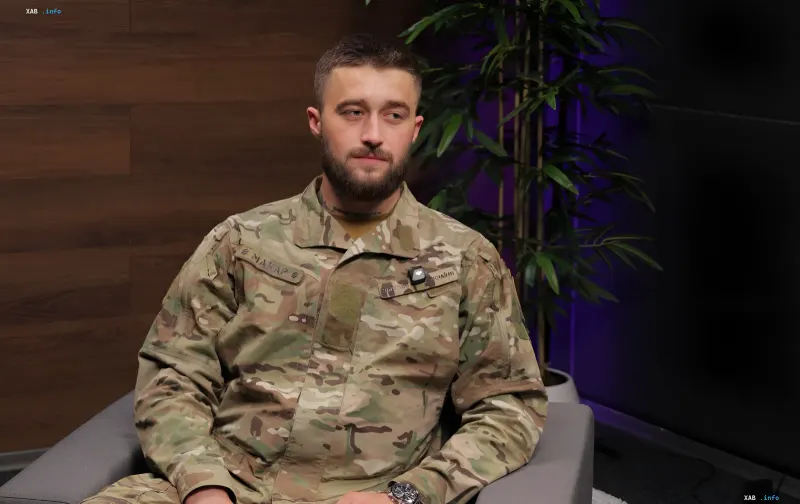
The large-scale "Vivaldi" operation conducted in the Lyman sector in the northern part of Donetsk Oblast got its name due to the dynamic nature of hostilities. According to unit commander Mykola "Makar" Zinkevych, the name refers to the composer's musical transitions: the lull in the summer period was replaced by a rapid and driven offensive in early autumn. During the operation, the forces of the 3rd Army Corps led by Brigadier General Andriy Biletsky managed to liberate over 125 square kilometers of territory while confronting three enemy armies simultaneously.
Innovative Robot Airdrop Tactics
One of the unit's main innovations was the aerial airdrop of UGVs into the enemy's rear using heavy bombers nicknamed "vampires." The idea was born out of a joking discussion but turned into effective combat practice. Delivering kamikaze robots to a depth of more than 10 kilometers into zones where the enemy felt safe causes massive panic among Russian troops. Such operations disrupt rotations and mechanized assaults because the occupiers are demoralized by the unexpected appearance of controlled equipment.
Contradictory Data
While official reports from the 3rd Army Corps command announce the successful deployment of specialized strike platforms and logistics systems, open sources and expert discussions raise debates about the classification and scale of the equipment involved. Some sources focus on the use of homemade or converted armored personnel carriers as kamikaze drones, while other experts emphasize the role of serial small-sized UGVs. Nevertheless, general data on the unprecedented level of logistics robotization—up to 80-90% in certain sectors—is confirmed by both sides.
The Future of Robotic Warfare
The experience of the NC13 unit shows that the management of modern battlefield technology is entrusted to infantry assault veterans who know the specifics of the frontline first-hand. Robots are capable of round-the-clock ambushes, delivering ammunition, and evacuating the wounded while minimizing personnel losses. As the unit command notes, the development of systems will continue until machines can completely handle the most dangerous tasks, confirming the main principle: "Robots don't bleed."