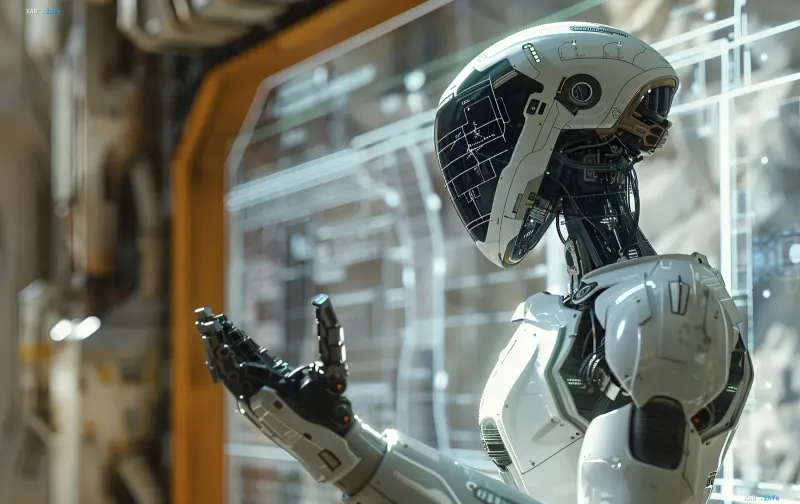
Beijing is hosting a major event set to redefine the capabilities of artificial intelligence and robotics. The Second World Humanoid Games, taking place from August 14, 2026, will bring together teams from 16 countries across six continents. Organizers promise 1,301 matches across 51 disciplines — ranging from football and running to household scenarios and industrial trials. As the host nation, China will field a record number of participants: 157 enterprises, 641 teams, and 1,975 robots.
Expanded Program: From Sports to Daily Life
The competition program has been significantly expanded compared to the previous year. For the first time, it includes long jump, weightlifting (with titles contested in light and heavy weight classes on August 24), tug-of-war, and table tennis. Dance disciplines — street, ballroom, and cheerleading — are now represented by 108 teams (compared to 29 last year). Freestyle bouts will take place in three weight categories: 40 kg, 58 kg, and 80 kg.
Special attention is paid to household and industrial scenarios. Trials cover nine areas: household, hospitality, industrial sites, emergency rescue, logistics, libraries, retail, office services, and vehicle charging. For instance, in the Dexterous Hand Challenge, robots must demonstrate manipulation precision: assembling tools, weighing powder, assembling blocks, hammering nails, opening bottles, unpacking, and connecting cables. The Integrated Five Challenge requires carrying loads and covering a 100-meter distance.
New Autonomy and Refereeing Rules
This year's competition features stricter regulations. The time limit for the 100-meter sprint has been reduced from three minutes to one minute, for the 400 meters from 15 to five minutes, and for the 1,500 meters from 40 to 15 minutes. Track events must be fully autonomous without remote control (except for the 100m and 400m hurdles). In scenario-based disciplines, autonomous execution receives a weighting coefficient of 1.0, while operator control is limited to a coefficient of 0.5.
Football rules have also been tightened: a goal is only counted if at least two teammates touch the ball during the attack. The refereeing body consists of 223 officials, including 28 international-level referees, 75 national-level, and 120 first-category referees. An expanded arbitration commission has been appointed to resolve disputes.
Contradictory Data
According to sources, teams from 16 countries and six continents are participating, including the USA, Brazil, Germany, and Japan. However, some reports mention that the number of countries may be higher, and some teams from Europe and Asia have not yet confirmed their participation. There are also discrepancies regarding the number of robots: some sources cite 1,975, while others mention up to 2,000. These contradictions may be due to recent changes in the participant list or technical issues with registration.
Significance for the Future of Robotics
The Second World Humanoid Games are not just a sporting event but a crucial step in the development of artificial intelligence and robotics. Success in these games could catalyze the integration of robots into daily life, from industry to the home. Organizers hope these games will become a regular event stimulating innovation and competition in robotics.