Love rarely follows an ideal script: it begins with an awkward conversation, arrives after a painful breakup, or forces one to rethink personal beliefs. These are the kinds of stories that form the basis of films where romance intertwines with humor, and characters find themselves in situations familiar to almost every viewer. The publication Styler (RBC) has compiled a list of seven romantic comedies about relationships which, according to the authors, leave behind only pleasant memories and a sense of coziness. These are not about "happy endings" in the pure sense, but about people learning to love, make mistakes, and start over.
"Bridget Jones": The Power of Imperfection
The starting point of the list is the story of Bridget Jones, an ordinary thirty-year-old Briton who decides to take control of her life. She starts a diary, promises to break bad habits, get in shape, and, most importantly, find a man with whom she will be happy. Plans, however, quickly crumble into a series of funny mishaps: two men appear in the heroine's life simultaneously — the charming but unreliable boss Daniel and the reserved Mark Darcy, who is not at all like her ideal. Constant doubts, mistakes, and awkward situations make this story particularly relatable to viewers: it is the heroine's imperfection that turns her into a mirror in which everyone recognizes themselves.
"Love Actually" and "The Holiday": Christmas Magic and Second Chances
Two films in the selection are united by a Christmas atmosphere and a belief in a "second chance." In "Love Actually," there is no single protagonist or one romantic line: events unfold in London on the eve of Christmas, and the focus is on people of all ages and social statuses. There is a prime minister who unexpectedly falls in love with a staff member, a writer who finds feelings far from home, a man mourning the loss of his wife, and a woman facing a choice between love and family. Their stories gradually intertwine, showing different facets of feelings — from first love to long-term devotion — and therefore the film, according to the authors, is especially "suitable" for a cold evening. In "The Holiday," Iris from an English village, hopelessly in love with a man marrying someone else, and Amanda from Los Angeles, who has just learned of a betrayal, agree through a website to swap houses for the holidays. The new environment brings unexpected encounters — composer Miles and the host's brother Graham — and turns the story into a warm tale of recovering from disappointment and being ready to let someone into your life again.
"500 Days of Summer" and "The Ugly Truth": When the Script Breaks
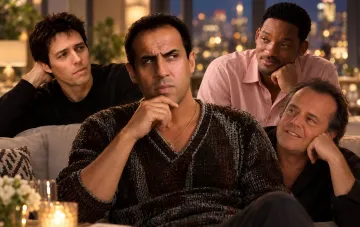
Next, the list moves from cozy settings to sharper stories. "500 Days of Summer" begins with a guy who believes in true love and a girl who does not share his romantic views: Tom, a greeting card writer, is convinced he met "the one" in Summer. But the film refuses to recount events sequentially — the viewer, along with the protagonist, returns to different moments of the romance, seeing happy days, misunderstandings, and the gradual drift of the lovers apart. This technique allows one to understand how differently two people can perceive the same story. "The Ugly Truth" is built on the destruction of a familiar world: Cal Weaver, who had a job, a house, children, and a marriage to his high-school sweetheart, learns of his wife's desire for a divorce. At a bar, he meets the confident lady-killer Jacob Palmer, who takes it upon himself to help him return to the dating world, change his style, and feel attractive again.
"About Time" and "The Big Sick": Love Beyond Fantasy
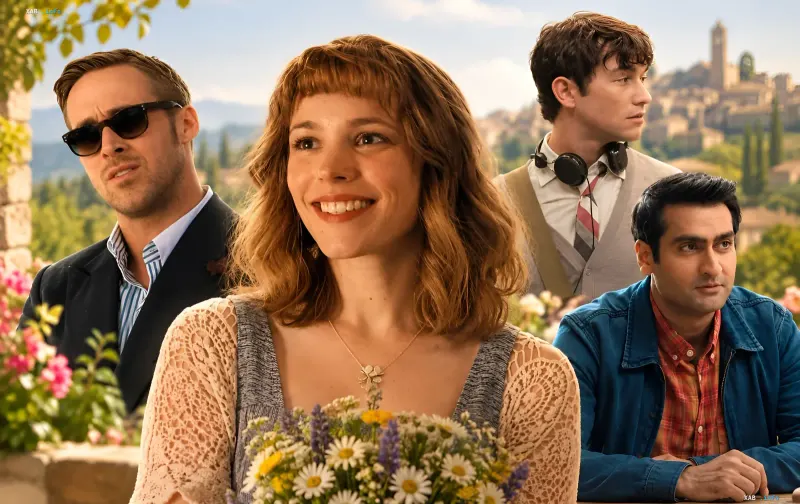
Rounding out the list are two stories where the personal transcends the ordinary. In "About Time," Tim Lake learns from his father that the men in their family can return to the past. At first, he decides to use the gift for romantic purposes, but after meeting Mary, he realizes that even time travel does not guarantee a cloudless relationship: one unsuccessful attempt to change something can overturn events that seemed resolved. Behind the fantastic premise, a story of closeness, family, and the value of ordinary days gradually emerges. "The Big Sick" stands out because its plot is based on the real-life story of screenwriters and spouses Kumail Nanjiani and Emily V. Gordon: in the film, Kumail plays a Pakistani-born stand-up comedian whose story of meeting his future wife becomes the basis of the plot. It is this reliance on real experience that makes the collection holistic: from the diary of an awkward Briton to a story that happened to real people, there are seven different ways to tell how relationships really work.