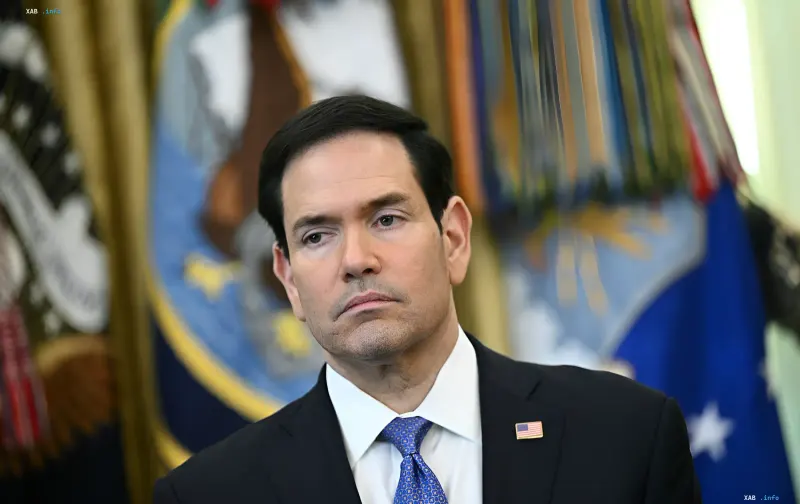
US Secretary of State Marco Rubio has publicly justified President Donald Trump's decision to suspend a series of sanctions against Russia for a period of 60 days. According to the head of the American diplomatic department, Washington intends to use this period to assess whether current negotiations involving Ukraine and Russia can lead to a sustainable settlement. «He wants to see if there is a possibility that the negotiations currently underway involving Ukraine and Russia will lead to something positive and help avoid another catastrophic year of war and conflict,» Rubio said, commenting on the White House's motivation.
Washington's Diplomatic Argument
At the core of the Trump administration's position is the calculation that temporarily easing sanctions pressure could serve as an incentive for Moscow to return to constructive dialogue. The president himself previously emphasized that he does not want his decisions to push Russia away from the negotiating table. In this logic, the 60-day pause acts not as a final step, but as a diagnostic tool: if negotiations do not demonstrate real progress within this timeframe, the sanctions policy can be restored to its previous volume. Such an approach, according to analysts, reflects Trump's overall strategy, in which economic pressure is viewed primarily as a lever to achieve a political result rather than an end in itself.
Criticism from Kyiv: «Strengthening Moscow's Positions»
Ukrainian President Volodymyr Zelenskyy, by contrast, criticized the easing of sanctions pressure, calling it a step that could strengthen Moscow's positions in the war. According to him, any relaxation amid ongoing hostilities creates the risk that Russia will receive additional time and resources to prepare new offensive operations without bearing an adequate economic price. Kyiv insists that sanctions policy must remain continuous and be tightened in response to escalation, rather than being suspended unilaterally without guarantees from Moscow.
What's Next: New Easing Measures and Demands on Ukraine
According to sources within the US government, Washington is already preparing additional packages of sanctions relief, including regarding Russia's tanker fleet and gas sector. At the same time, as the same source reports, Ukraine is being asked to halt strikes on Russian oil refineries without offering any concrete compensation or security guarantees. Such an asymmetrical approach, observers believe, increases internal tension in US-Ukrainian relations and calls into question the stability of the bilateral partnership at a time when Kyiv views sanctions as one of the key tools of pressure on Moscow.
Alternative Tracks: Beijing and Moscow's Proposal
Against the backdrop of the US-Ukrainian discussion on sanctions, Russia has reportedly proposed holding a trilateral summit in November involving the US and China. The initiative, if implemented, could become an alternative diplomatic channel parallel to the current negotiations involving Ukraine. For Washington, participating in such a format would mean recognizing Beijing's role as an equal arbiter, which in turn raises additional questions about what concessions might be embedded in the final agreement. Thus, the 60-day pause in sanctions turns out to be inscribed in the broader context of multi-vector diplomacy, where both bilateral and multilateral negotiation tracks operate simultaneously.