
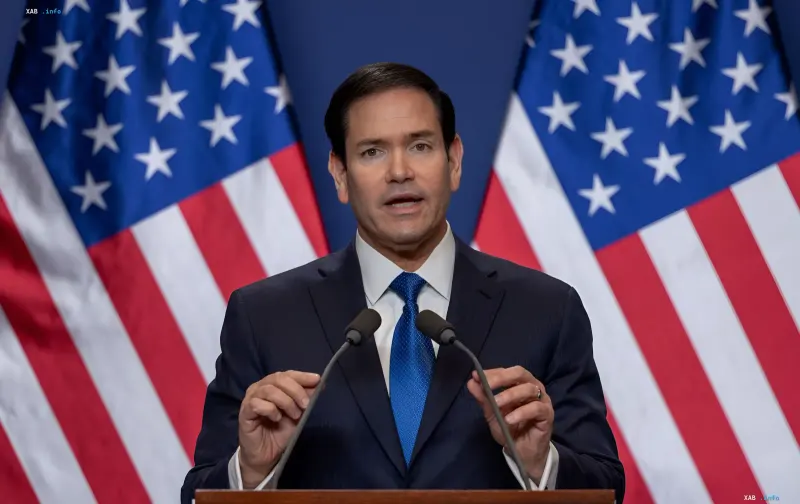
US Secretary of State Marco Rubio, during hearings in the House of Representatives, clearly outlined Washington's position regarding the conflict in Ukraine. In his statement, he rejected the notion that the United States is acting as a neutral mediator in Russia's war against Ukraine.
Rejection of Neutrality and Choosing a Side
Rubio emphasized that the US is acting with a clearly defined political stance. According to him, Washington has "chosen a side" and continues to support Kyiv. The Secretary of State noted that the US administration is maintaining sanctions pressure on Russia and continuing arms supplies to Ukraine.
"Obviously, we have chosen a side, we continue to supply weapons to Ukraine under the PURL program," Rubio stated. He clarified that US restrictive measures are directed exclusively against Moscow, while Russia receives no military aid from Washington, and Ukraine is not subject to sanctions from the US.
No Military Solution to the Conflict
In his speech, Marco Rubio also addressed the question of how to end the war. He stated that the US does not see a military solution to the conflict. In the Secretary of State's opinion, the war can only be stopped by diplomatic means, but for now, this is hindered by the lack of readiness of the parties to compromise.
Washington, according to Rubio, continues to support any efforts aimed at establishing peace, as it believes that "the destructive war in Ukraine has no military solution".
International Context and Kyiv's Position
Support for Ukraine, according to Rubio, is being carried out within international mechanisms, including the PURL program. These initiatives, he said, operate independently of other global events and remain part of US policy.
Recall that earlier, Ukrainian President Volodymyr Zelenskyy stated that Kyiv is open to any formats of diplomatic termination of the war, including the possibility of direct negotiations with Russian leader Vladimir Putin. At the same time, the Ukrainian President noted that the attention of the United States has largely shifted to other international crises and conflicts, which affects the overall context of diplomatic efforts surrounding the war.


