
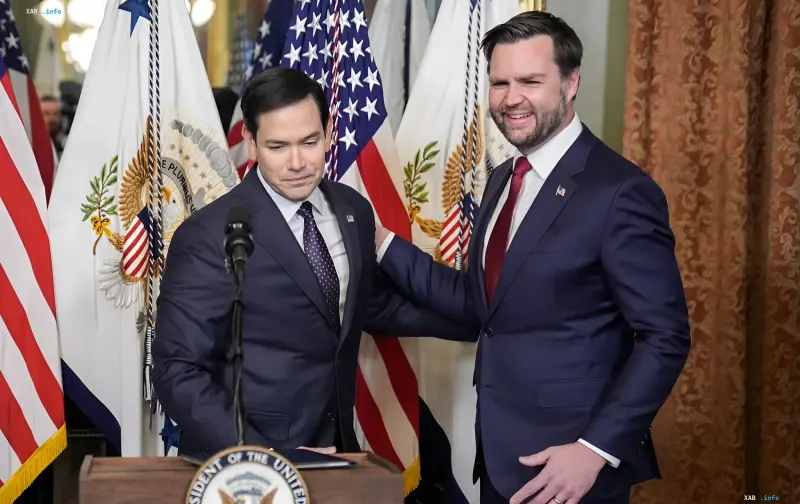
A serious political drama is brewing in the White House that could determine the future of the Republican Party. U.S. Secretary of State Marco Rubio, holding one of the key positions in the administration, has made it clear: he will not compete with Vice President JD Vance for the right to run for president in 2028 if Vance expresses such an intention.
This move, reported by Associated Press, appears to be an act of strategic partnership, but behind the scenes lies a fierce struggle for influence and the ideological legacy of Donald Trump. Rubio has repeatedly discussed with trusted associates and advisors the possibility of yielding to Vance to avoid internal conflict within the party.
Battle for Influence in the Administration
Despite Rubio's willingness to step aside, he is actively strengthening his position. In recent months, the Secretary of State, who combines this role with the position of Assistant to the President for National Security, has conducted a large-scale personnel purge. He has appointed his supporters to key posts in the National Security Council, effectively restructuring the body to suit his needs.
Among the new appointees are Mike Nitham, a former State Department advisor who became Deputy National Security Advisor, and Jeremy Lewin, who previously oversaw the dismantling of USAID and now leads the Western Hemisphere affairs division.
Ideological Split: "Free World" vs. Pragmatism
The main conflict between the two politicians lies not in personal ambitions, but in their approach to foreign policy. Marco Rubio remains faithful to Ronald Reagan's doctrine, advocating the concept of a "free world" and global U.S. leadership. Vance, on the other hand, rejects such "abstractions," preferring a pragmatic approach and abandoning ideological dogmas.
These disagreements manifest in specific issues:
- Middle East: Vance has repeatedly criticized Israel's actions in Lebanon, whereas Rubio maintains steadfast support for Tel Aviv or prefers not to comment on the situation.
- Iran: Attitudes toward negotiations with Tehran have also divided the politicians. Rubio was skeptical about the possibility of an agreement and in April refused to lead the delegation to Pakistan. Vance, seeing an opportunity to strengthen his position, asked Trump twice to entrust him with leading the mission, which the president eventually agreed to do.
Forecasts for 2028
Currently, JD Vance is considered the main favorite for the 2028 election. As early as the beginning of 2025, Axios reported that Vance is being actively positioned as the successor to the MAGA (Make America Great Again) movement. Rubio himself is convinced that the Vice President is the only viable candidate.
However, according to diplomat Ian Kelly, both politicians have equal ambitions. Kelly warns that Vance's success in negotiations with Iran will be a decisive factor: a failure of the mission could put an end to his presidential plans.
State Department Press Secretary Tommy Pigott, commenting on the situation, emphasized that Rubio and the entire administration are acting in full agreement with President Trump. Donald Trump himself previously stated that he is not thinking about a third term, but highly rated both Vance and Rubio, calling the Republican "bench" strong.


