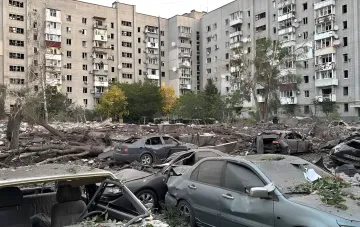
On the morning of October 7, 2026, the Poltava region of Ukraine was subjected to a massive missile and drone strike by the armed forces of the Russian Federation. Local authorities and representatives of the Air Force of the Armed Forces of Ukraine recorded the launch of several groups of cruise missiles that crossed the airspace of the region, posing a direct threat to the civilian population and critical infrastructure. In particular, loud explosions rocked Kremenchuk and its surroundings.
Chronology of the Attack and Air Defense Actions
According to operational data from the Ukrainian Air Force, the first groups of air assault weapons began to be recorded in the skies over the region in the early hours. The missiles headed from the northern direction, setting a course for Poltava, Dykanka, and Kremenchuk. Some of the projectiles maneuvered and changed their trajectory in an attempt to bypass the positions of the Ukrainian air defense system. The military administration urged all residents of the region to remain in shelters until the official cancellation of the air raid alert.
Scale of Night Strikes Across Ukrainian Regions
The current attack became part of a massive combined strike that hit several Ukrainian regions simultaneously last night. The capital of Ukraine, Kyiv, was shelled with ballistic weapons several times, resulting in at least two deaths in the Darnnytskyi district. In addition, serious destruction was recorded at an industrial enterprise in Dnipro, as well as at transport infrastructure facilities in Zaporizhzhia.
Intelligence Warnings and Preparation for Shelling
Ahead of the massive escalation, the Ukrainian military and political leadership warned citizens about the high probability of heavy shelling. On the evening of October 6, Ukrainian President Volodymyr Zelenskyy addressed the nation, drawing on updated data from Ukrainian intelligence. The situation was compounded by the nighttime takeoff of Tu-95 strategic bombers from Russia's Olenegorsk airfield, which foreshadowed the launch of long-range missiles.
Contradictory Data
While covering the current wave of attacks, various sources have provided conflicting data on the exact scale of destruction and the number of casualties across the regions. Thus, preliminary reports from local administrations indicate localized hits on infrastructure facilities, while international and independent monitoring groups citing rescue services report an overall increase in the number of dead and wounded nationwide to four dead and at least 14 injured, including incidents in the Kyiv region. Experts continue to verify incoming information.