
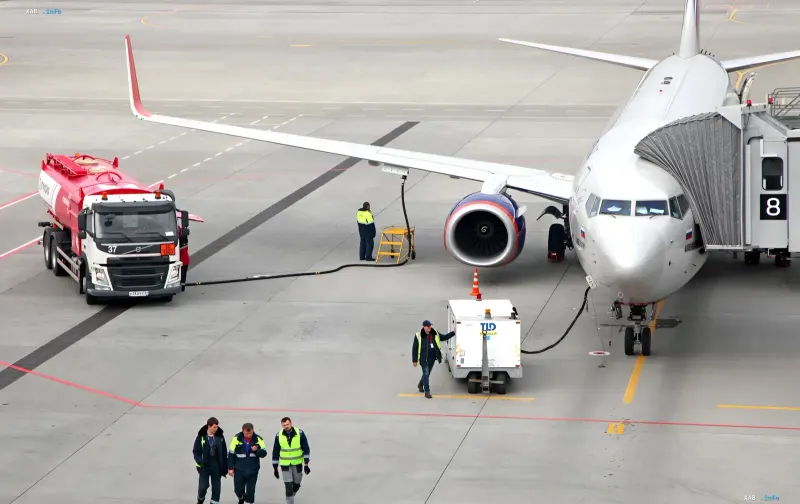
A serious crisis is brewing in the Russian aviation industry. Successful strikes by the Armed Forces of Ukraine on Russian oil refineries have led to a critical fuel shortage. As a result, the aggressor country is forced to seek ways to import aviation kerosene, turning to partners in North Asia.
Import schemes via intermediaries
According to three sources, Russia has already agreed to purchase a batch of aviation fuel from Japan, using a chain of trading intermediaries. The deal appears complex and multi-stage to conceal the final recipient of the cargo.
According to the publication's sources, in the first half of July, no less than 200,000 barrels of aviation fuel will be shipped from the Japanese port of Chiba. However, the cargo will not be sent directly to Russia. First, the batch will be delivered to South Korea.
Presumably, at the South Korean port of Yeosu, the fuel will be transshipped onto another tanker before the final leg of the journey. The final destination in Russia currently remains unknown. Such schemes of "transshipping" cargo through third countries are not news to logistics experts.
History of supplies and export statistics
The ship tracking system Kpler recorded a similar operation back in February 2022. At that time, 22,000 barrels of aviation fuel were delivered from Yeosu to Vladivostok, confirming that Russian logisticians have established routes for imports through Asia.
At the same time, exports of Russia's own aviation fuel reserves have sharply decreased this year. According to Kpler, it currently stands at about 13,000 barrels per day, with the bulk of this volume going to Turkey. For comparison, in 2025, Russia exported about 30,000 barrels of this type of fuel daily.
Consequences for civil aviation
The fuel shortage is already affecting the operations of Russian airlines. In particular, the airline "Azimuth" is experiencing a critical shortage of aviation fuel. The situation intensified from the beginning of June, when prices for aviation kerosene in Russia rose by an average of 17%.
Several major airports in the country were forced to limit aircraft refueling. This is a direct consequence of the destruction of production capacity in the oil refining industry as a result of Ukrainian strikes. Russian aviation, previously considered a reliable sector, is now suffering from a fuel collapse caused by the actions of the Ukrainian army.


