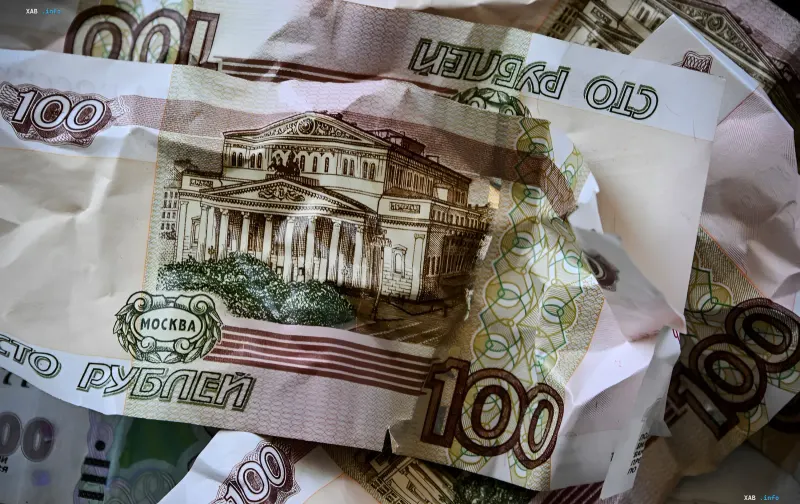
The Russian economy is facing an unprecedented challenge: conventional methods of financing military expenditures have been exhausted. In a situation where the market ceases to accept state obligations, the Kremlin is forced to resort to hidden but large-scale ruble emission. This is evidenced by data obtained by the Foreign Intelligence Service of Ukraine (SZRU) and published by RBC-Ukraine.
Mechanism of "Forced" Support
The essence of what is happening boils down to a closed loop that effectively replaces market financing. The Russian government is no longer able to attract sufficient funds through the sale of government bonds under normal conditions. The market reacts to high risks and interest rates by refusing to participate in auctions. In response, the Ministry of Finance of Russia launches a mechanism whereby state banks are forced to buy up these securities, while the Central Bank of Russia provides them with the necessary funds.
As explained by the intelligence service, the budget receives the necessary funds, but the price of this is a direct dependence of the economy on the printing press. Public debt turns into a tool of indirect emission, which inevitably leads to an increase in inflationary risks.
Record Debt Volumes and Budget Deficit
The scale of the operation is impressive. To implement this scheme, the Ministry of Finance of Russia registered two new issuances of bonds with deferred repayment: for $6.4 billion (repayment in 2037) and for $12.8 billion (repayment in 2042).
As of July 1, Russian banks already held government bonds in their portfolios worth $248.1 billion. This accounts for about 9% of all assets of the country's banking system. Notably, since the beginning of the year, this figure has increased by another $6.5 billion, confirming an aggressive policy of buying up.
The main driver of these processes has been the rapid growth of the budget deficit. In the first six months of 2026 (according to the source), the deficit reached almost $77 billion. The main reason remains the colossal costs of waging war.
Forecasts and Consequences
SZRU forecasts that additional military expenditures may exceed planned figures by another $51.3–64.1 billion. The Central Bank of Russia, in turn, expects that by the end of the year, the budget deficit may rise to $105.1 billion.
The situation is exacerbated by the fact that it is becoming increasingly difficult for Russia to borrow money on the open market. Due to low demand and high rates, the Ministry of Finance of Russia was forced to cancel at least three bond sales auctions in June and July.
"The transition to the forced attraction of resources from state banks does not solve the problem of the deficit, but only hides it," note the Ukrainian intelligence services. Such a model makes the economy even more dependent on money emission, which threatens to further accelerate inflation.
Capital Flight and Market Decline
Against the backdrop of these events, the Russian stock market has been showing a steady decline for 19 weeks in a row. In response to economic instability, the wealthiest citizens of Russia have begun actively withdrawing funds from the country, transferring assets into cryptocurrency, foreign real estate, and private investment funds.