
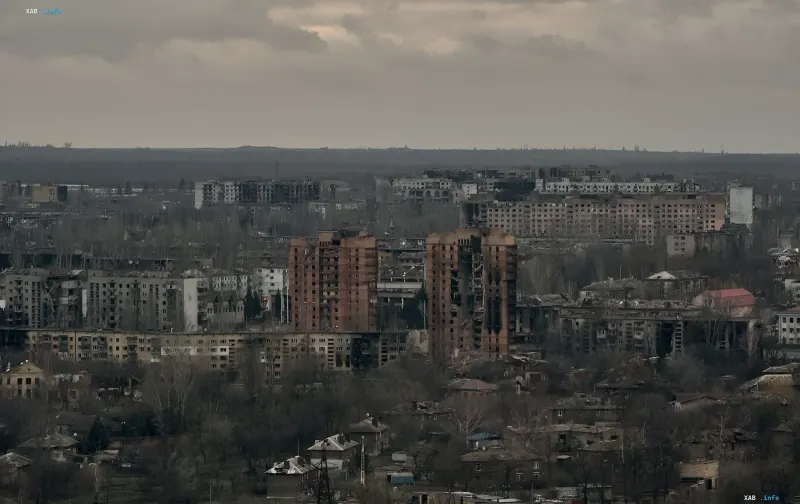
Amidst ongoing hostilities in the Donetsk region, a new round of diplomatic and information warfare is unfolding. The Russian Ministry of Defense has put forward an unexpected proposal: to temporarily halt shelling of the city of Konstantynivka under the pretext of a "humanitarian operation." According to Russian representatives, this is necessary to transfer the bodies of fallen servicemen.
Moscow's proposal and ceasefire conditions
In a statement, the Russian Ministry of Defense claims that the city is allegedly "liberated" by Russian troops and is under full control of Moscow. Based on this, the ministry proposed a ceasefire regime in Konstantynivka from 12:00 to 18:00 on July 6. A response from the Ukrainian side is expected by noon on July 5.
However, the proposal itself is built on a controversial premise — that the city has already been captured. This assertion raises serious doubts, especially given the official position of Kyiv and data from independent sources.
Denial from Ukraine
Immediately after Vladimir Putin's statement about "full control" over Konstantynivka, the General Staff of the Armed Forces of Ukraine officially refuted this information. Ukrainian representatives emphasized that the city remains under the control of the Ukrainian Defense Forces. This is supported by data from the analytical resource DeepState, which records no advance of Russian troops in this direction.
Thus, the proposal for a humanitarian pause is based on a fact that does not correspond to reality. This casts doubt on the true objectives of the Russian initiative.
Zelenskyy's reaction and refusal to meet
Ukrainian President Volodymyr Zelenskyy reacted to Putin's statement with irony and a challenge. He proposed that the Russian leader hold a bilateral meeting right in Konstantynivka — "if it is indeed under Russian control." According to Zelenskyy, this would be an opportunity to find diplomatic solutions to end the war.
"But he still won't cross the front line: the truth differs greatly from Putin's words," noted the Ukrainian president, pointing to the gap between Kremlin rhetoric and reality on the ground.
However, it has already become known today that Kremlin spokesperson Dmitry Peskov rejected the idea of a meeting in Konstantynivka. Instead, Moscow is once again proposing to hold negotiations in Moscow, while simultaneously declaring the continuation of hostilities. This confirms that the initiative for a "humanitarian operation" is not a step towards peaceful settlement, but rather an element of an information campaign.
What lies behind the proposal?
The proposal for a temporary ceasefire in a city that is not under Russian control looks like an attempt to create an appearance of humanity and initiative. At the same time, it could serve as a tool to disorient the enemy or create a false impression of progress on the front.
In conditions where both sides actively use the information space to achieve their goals, every statement requires careful verification. In this case, the facts speak that Konstantynivka has not been captured, and the ceasefire proposal is more of a political gesture than a real step towards reducing tension.


