
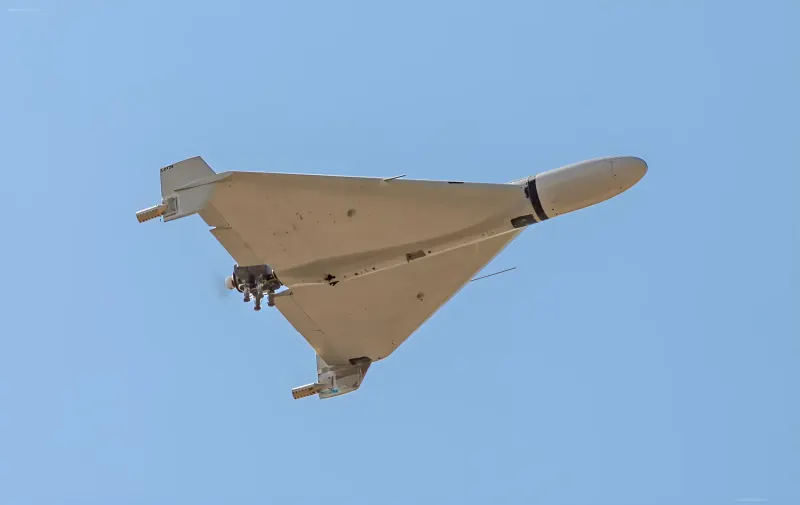
A quiet but fundamental revolution is taking place in the skies over the front lines. The era of linear attacks, where drones followed pre-programmed routes, is fading into the past. They are being replaced by "smart" swarms—coordinated groups of unmanned aerial vehicles capable of making real-time decisions. Military expert Anatoliy Khrapchynsky told RBK-Ukraine about this new tactic, revealing details that threaten traditional air defense schemes.
The Death of Linear Tactics
Traditional cruise missiles and early versions of drones were predictable: they flew along coordinates set by a ground operator. If an air defense system intercepted the first unit, the rest would plow forward, unaware of the danger. Today, the situation has changed radically thanks to the implementation of mesh-network technology.
This allows drones to exchange data with each other mid-flight. If the lead unit detects a threat—whether a mobile firing point or an interceptor drone—it instantly transmits this data to the others. Moreover, the information is relayed to the operator via special chatbots in Telegram. The drones following the leader automatically change their trajectory, bypassing the dangerous sector. This transforms the attack from a linear assault into a maneuvering raid that is extremely difficult to predict.
Hunting for Radiation
The danger is compounded by the fact that some modifications of "Shahed"-type drones are now equipped with electronic intelligence equipment. They no longer just fly to a target; they can independently detect the radiation of Ukrainian radars or electronic warfare systems and home in on them. This turns air defense from a defender into a target that the drone hunts itself.
Who Will Kill the Swarm?
The classic air defense rule of "see and destroy" is ceasing to work against a swarm. The expert emphasizes that for effective combat, Ukraine needs a "smart" air defense system capable not just of shooting down drones, but of precisely destroying communication relays. These are the "brains" of the group. As soon as the connection is lost, the drones turn into ordinary loitering munitions, which are significantly easier to shoot down.
Technological Asymmetry
The main challenge lies in the accessibility of technology. Russia is actively using civilian computer components to modernize its weaponry. Household chips and components are being integrated into military systems, creating artificial intelligence for combat tasks. As Khrapchynsky summarized: while some use AI to find cures for cancer, others apply the same technologies for killing. As long as the occupiers have the ability to produce and upgrade equipment, the threat of swarms will remain relevant.


