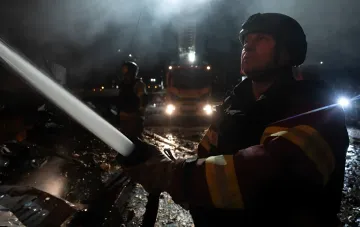
On Wednesday, November 25, Russian military forces launched a ballistic missile attack on Kyiv. The mayor of the capital, Vitali Klitschko, confirmed the attack in a statement: "Explosions in the capital. The city is under a ballistic attack." The mayor urged residents and visitors of Kyiv to remain in shelters until the official air raid alert is lifted. This was reported by RBC-Ukraine.
Confirmed attack and call to shelter
According to the publication, a series of explosions occurred in the city following reports of missiles heading towards the capital. The city administration immediately issued a recommendation not to leave protective structures. An official cancellation of the alert had not been issued at the time of publication, indicating the potential duration of the episode.
Reports of a strike on an energy facility
Local Telegram channels and news outlets are reporting a strike on an energy facility in Kyiv. However, there have been no official confirmations or denials from relevant departments at the time this material was prepared. The XAB.info editorial team notes that this episode remains unofficially confirmed and requires verification.
Context: energy strikes and the November 24 incident
The attack on November 25 is a continuation of a series of strikes on Ukrainian infrastructure. Prime Minister Serhiy Koretskyi previously reported that in the night of November 25, Russia's main strike was directed at the energy sector, with the most difficult situation recorded in Zaporizhzhia. The day before, on the evening of November 24, a Russian drone hit the courtyard of a 16-story apartment building in Kyiv’s Shevchenkivskyi district: a fire broke out on the first and second floors, three people were injured, and neighboring residential buildings, a kindergarten, an office space, a hotel, and cars were damaged.
Pattern of ballistic attacks on the capital
Ballistic strikes on Kyiv are not an isolated phenomenon: earlier, on the night of November 20, the Ukrainian Air Force recorded repeated launches of ballistic missiles from Bryansk, followed by explosions and fires in several districts. The recurrence of such episodes points to a consistent tactic of using ballistic weaponry against major cities, including at night, when the risk to the population is at its maximum.