
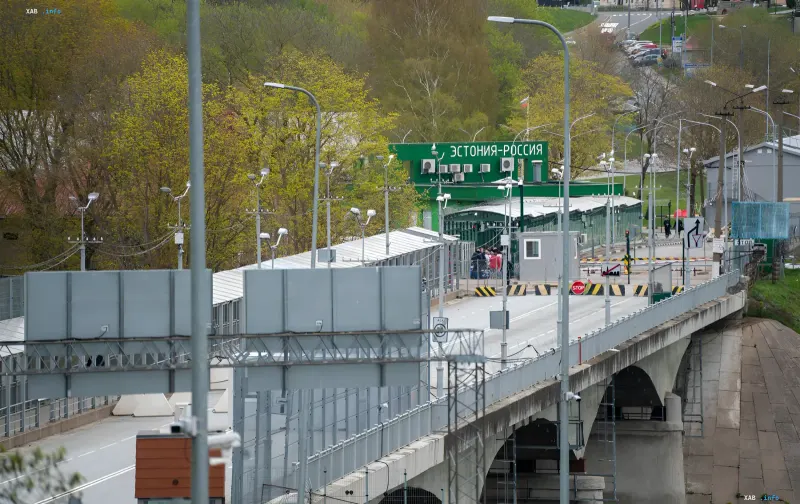
The Russian government has decided to temporarily suspend railway communications with several European Union countries. The official decree, published by TASS, sets the date for the start of restrictions: from July 1, 2026, movement through key border checkpoints will be halted.
Details of the Border Closure
The Russian government document states that the ban covers not only passenger transport but also the transit of goods, cargo, and vehicles. The restrictions apply to specific sections of the state border where strategically important railway checkpoints are located.
The list of affected territories includes:
- Russia-Finland section: movement will be stopped along the entire length of the border.
- Russia-Estonia section: the "Pechory-Pskovskie" checkpoint in the Pskov region will be closed.
- Russia-Latvia section: the "Pytalovo" checkpoint, also located in the Pskov region, will cease operations.
Diplomatic Reaction
The Russian Ministry of Foreign Affairs will notify the official authorities of Helsinki, Tallinn, and Riga of the decision. This action will serve as formal confirmation of the severance of railway links, which will inevitably affect logistics chains and passenger traffic between the countries.
Geopolitical Context
Moscow's decision to close the borders fits into the general context of growing tension in the region. Previously, Polish Foreign Minister Radosław Sikorski noted that the Baltic states — Estonia, Latvia, and Lithuania — feel most vulnerable in the face of threats from the Russian leadership.
In response to such concerns, Chris Donahue, the US commander of NATO land forces in Europe, made it clear that the United States will not leave its European allies without support in the event of a possible escalation or invasion of the Baltic states.


