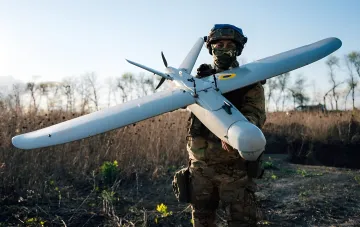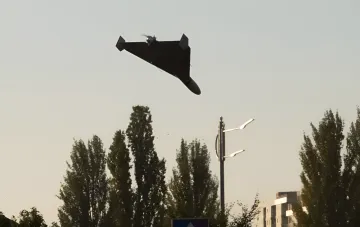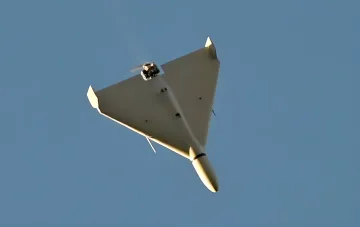
European Commissioner for Defense and Space Andrius Kubilius stated while speaking to journalists in Brussels that, according to Ukrainian forecasts, Russia will deploy about 10 million drones against Ukraine in 2026, and by 2027 this figure will reach approximately 20 million. According to him, it is this scale of drone usage that determines the requirements for the level of countermeasures that Kyiv must ensure with the support of the European Union. "Ukraine, with the support of the EU, must provide an appropriate level of countermeasures. And it will ensure it," the European Commissioner emphasized, adding that the €60 billion defense loan for 2026–2027 "fundamentally changes the situation" and guarantees rapid and predictable arms supplies.
€60 billion defense loan and 2027 schedule
Kubilius explained that the full planned €28.3 billion will be allocated by the end of 2026, while the remaining €31.7 billion is intended by the EU for defense needs in 2027. The European Union has already begun developing a funding schedule for 2027 totaling €14.4 billion for the procurement of drones and ammunition, which will allow funds to be disbursed starting from January 2027 without interruption. According to the Commissioner, this year's experience has confirmed that the loan to support Ukraine's defense is working and is shared by the Ukrainian side.
Drone share in Ukraine's needs to rise to 62%
In the structure of Ukraine's arms requirements, the share of drones is growing rapidly: at the beginning of 2026 it was 31%, and by 2027, according to data announced in Brussels, it will reach 62%. To maintain defense capabilities throughout 2027, the Instrument for Coordinated Support to Ukraine (ICSUA) will be utilized, which, according to Kubilius, will ensure the procurement primarily of air defense assets, systems for deploying and countering drones, electronic warfare equipment, as well as missiles and ammunition.
EU production and the new Defense Industrial Pact
The European Commissioner emphasized the need to increase arms production directly within the EU so that deliveries take place in 2027, not in 2028 or 2029. According to him, the new Defense Industrial Pact between the EU and Ukraine and the €21 billion SAFE loan program will contribute to increasing European production capacities and creating joint defense capabilities for both parties.
Context: Moscow's position and new drone tests
Kubilius' statements came against the backdrop of The New York Times reports that Russia is not ready for serious negotiations on ending the war and seeks to continue hostilities at least until the end of winter. In parallel, Fedir Venislavsky, a member of the Verkhovna Rada Committee on National Security, Defense, and Intelligence, reported that Russia is testing the "Geran-6" jet drone, capable of accelerating to 1000 km/h, which further raises the requirements for countermeasure systems on the Ukrainian front.