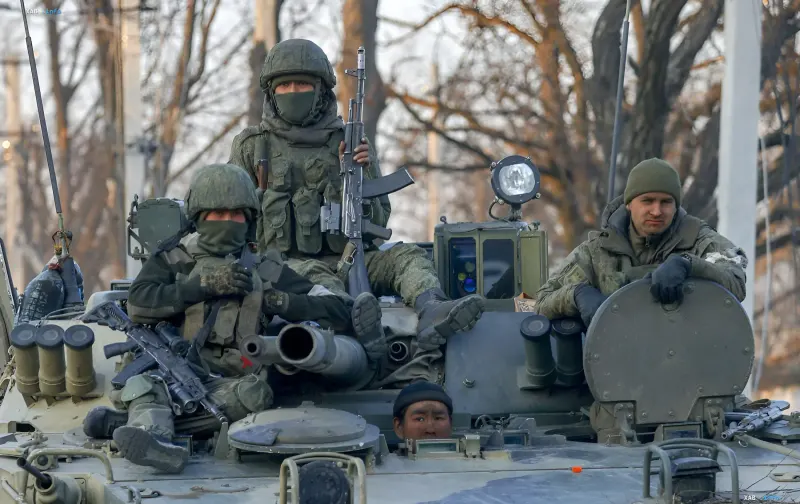
Immediately following the end of the humanitarian ceasefire in temporarily occupied Oleshky, the activity of Russian military forces has dropped sharply, according to assessments by the Ukrainian Defense Forces. This was announced on air during the national telethon by Marine Corps spokesperson Pavlo Drogal. According to him, the enemy, having received supplies and ammunition during the "silence," has effectively lost its former visibility in the city and has shifted to defensive behavior.
Assessment by the Defense Forces: occupiers are "hiding in basements"
Drogal explained that during the ceasefire period, Russian units moved ammunition and artillery into the Oleshky area and rotated personnel. However, he asserts that after receiving provisions and ammunition, this personnel "hardly appears" on the streets and is "hiding in basements." The military official emphasized that Ukrainian defenders are monitoring the airspace over Oleshky, which remains under their control, a factor that he claims directly limits the enemy's activity within the city.
Results of the humanitarian ceasefire
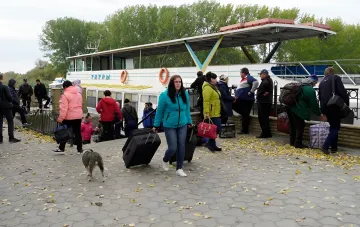
Recall that from October 27 to November 1, a humanitarian ceasefire was in effect in Oleshky, implemented under the coordination of U.S. First Lady Melania Trump. During the operation, necessary aid was delivered to local residents, and nearly 800 civilians who were under threat due to combat operations and Russian occupation were evacuated. Thus, the period of silence allowed not only for a decrease in the intensity of shelling but also for the organization of the evacuation of a significant number of civilians.
Prospects for new humanitarian missions
Ombudsman Dmytro Lubinets stated that Ukraine is considering the possibility of conducting new humanitarian missions in temporarily occupied territories. Furthermore, he reported that the country is preparing for an additional safe departure of civilians from the temporarily occupied Oleshky and surrounding settlements. This indicates that Kyiv intends to continue its work in organizing humanitarian corridors and civilian evacuations even under the conditions of resumed combat.
Thus, the end of the ceasefire in Oleshky coincided, according to the Defense Forces, with a sharp decline in the visibility of Russian units in the city, while at the political and humanitarian level, the launch of new aid and evacuation missions for civilians from occupied territories is being discussed.