
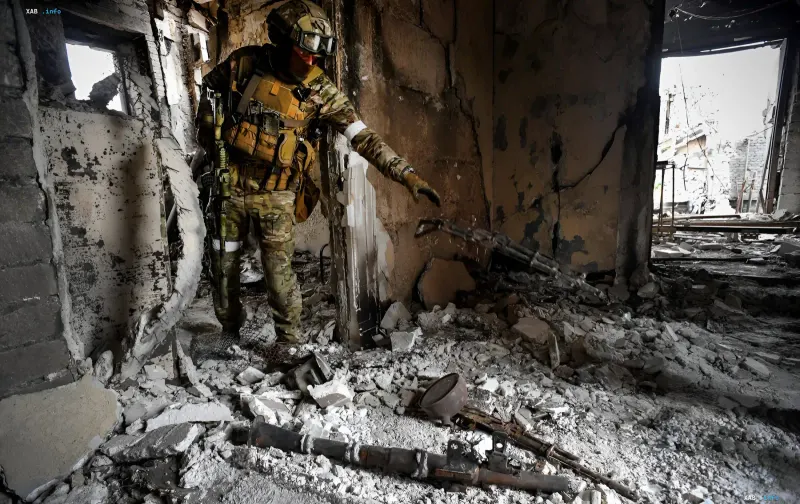
The situation on the front has undergone radical changes. According to analysts, over the last year, the speed of the Russian advance has decreased 16-fold. If previously the occupiers could seize significant territories in a short period, their current progress is measured in hundreds of meters. In June 2026, Russian troops captured or entered Ukrainian territories with a total area of approximately 30.42 sq. km. On average, this amounts to 1.01 sq. km per day.
Anti-record pace of advance
To understand the scale of the slowdown, it is sufficient to compare current figures with data from June 2025. At that time, the Russian army captured 481.25 sq. km of Ukrainian territory, advancing an average of 16.04 sq. km per day. This means that the pace of the enemy's offensive has decreased by approximately 16 times. Experts from the Institute for the Study of War (ISW) note that for more than a year, Russia's territorial gains have remained slow and gradual.
Interestingly, even the significantly higher rates of advance recorded in 2025 were characterized by analysts as sluggish progress. Therefore, this year the situation for the adversary has deteriorated significantly — the Russians have set a new anti-record in the speed of their offensive.
Tactics of 'step-by-step offensive'
According to analysts, the Russian army has effectively reverted to a 'step-by-step offensive.' It is unable to achieve deep breakthroughs on the front. Currently, the enemy is advancing only on small sections — by hundreds of meters or a few kilometers. This indicates that Russian troops are facing serious difficulties in organizing large-scale operations.
Window of opportunity for the Defense Forces
The slowdown in the enemy's offensive pace opens a new 'window of opportunity' for Ukraine's Defense Forces. They can not only more effectively destroy enemy personnel but also implement new counter-offensive operations. This offers a chance to turn the tide on the front.
Internal problems in Russia
The situation inside Russia also does not contribute to stabilizing the position on the front. Previously, RBK-Ukraine reported that on July 2, the Defense Forces attacked one of the largest Russian refineries. A fire is currently raging there. Due to daily 'blunders,' gasoline prices in Russia are showing the most rapid growth in the last 20 years. Currently, the Kremlin is looking for various ways to stabilize the situation. For example, it is begging for help from Kazakhstan.


