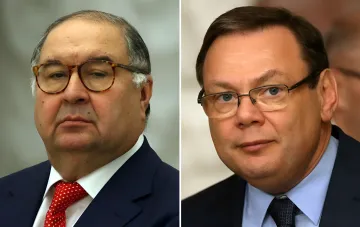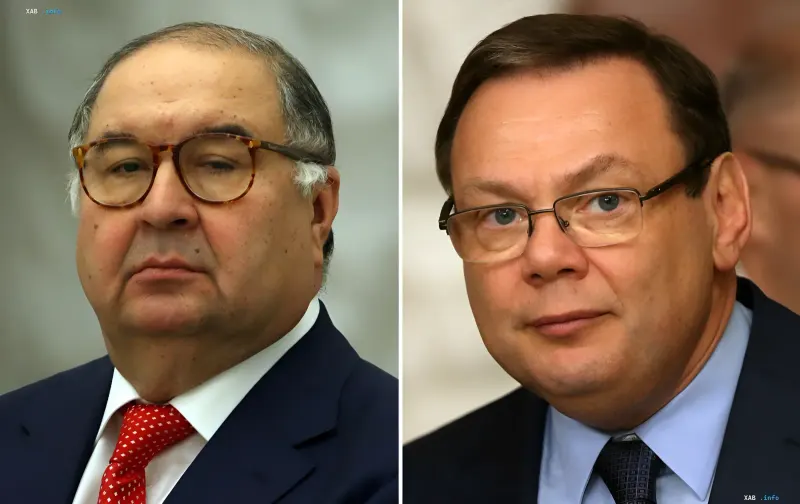
Russian oligarchs have begun closely examining the precedent set by the successful removal of European Union sanctions from billionaires Alisher Usmanov and Mikhail Fridman. After years of legal battles and asset freezes, many representatives of big business saw this as a real opportunity to reconsider their own sanction status. Despite the skepticism of some entrepreneurs who rely only on ironic comparisons, the legal community notes a serious shift in the sentiment of the Russian business elite.
The Usmanov and Fridman Precedent: New Opportunities for Big Capital
The successful lifting of restrictive measures against Alisher Usmanov and Mikhail Fridman became an unprecedented event for Brussels' sanctions policy. These cases demonstrated that even the EU's strict sanctions architecture is amenable to legal and political transformation given massive legal resources and state-level support. According to Bloomberg, France's unexpected diplomatic and political campaign in support of Usmanov played a key role in this process, while causing serious disputes and disagreements within the European community itself.
Contradictory Data
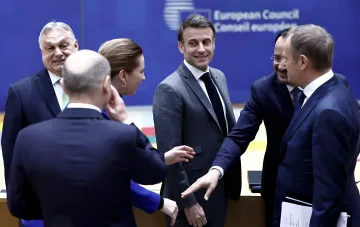
Assessments of ongoing events diverge cardinally among experts and Russian business circles alike. Some oligarchs and their inner circles are convinced that the exclusion of Usmanov and Fridman is due exclusively to a unique coincidence of circumstances and special political factors that cannot be replicated on a mass scale. Another faction of entrepreneurs intends to use investment arbitration and large-scale lawsuits as a pressure tool against European governments to establish precedents. At the same time, Estonia and several other EU countries openly demand explanations from Paris, stating that such concessions undermine general sanctions discipline and threaten the extension of thousands of existing restrictions.
Prospects for Lawsuits and Brussels' Reaction
Analysts note that the activation of Russian billionaires in courts could significantly complicate the work of European Union institutions. The use of investment arbitration has the potential to accelerate negotiation processes, yet the EU leadership faces growing internal pressure due to criticism from the Baltic states and Eastern Europe. Thus, the success of Usmanov and Fridman opens a new chapter in the sanctions confrontation, where lawsuits and political lobbying become big capital's main weapon against restrictive measures.