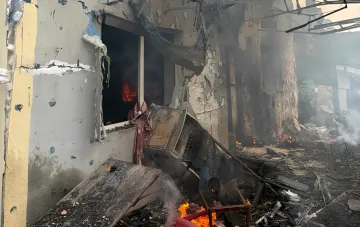
On the afternoon of October 22, 2026, Russian forces launched a targeted drone attack on a passenger electric train operating in the Kharkiv region. As a result of a direct hit by the unmanned aerial vehicle on the main carriage, a severe fire broke out, engulfing the structure. The incident triggered an immediate response from regional emergency services dispatched to handle the crisis.
Operational liquidation of the strike aftermath
Units of the Main Directorate of the State Emergency Service of Ukraine in the Kharkiv region were immediately deployed to the scene. Rescue workers had to operate under extremely dangerous conditions due to the constant threat of secondary air strikes by the enemy. Despite the high risks, firefighters promptly localized and completely extinguished the fire in the train carriage.
According to preliminary official data from the agency, there were no casualties or injuries among passengers and train crew members as a result of the hostile UAV strike. The professional actions of SES personnel prevented more severe consequences of this railway transport incident.
Context of regular attacks on transport infrastructure
This incident continues a series of targeted strikes against Ukraine's transport and logistics infrastructure. Previously, the state-owned company Ukrzaliznytsia has repeatedly faced massive shelling by the Russian Federation, resulting in extensive damage to railway tracks, stations, and rolling stock, as well as causing serious delays for passenger and freight trains.
In addition to destruction from direct shelling, the transport system faces collateral incidents under wartime conditions. Recently, widespread public resonance was caused by an incident where the Lviv–Chernivtsi train resumed movement in the middle of an open field after an air raid alert ended, leaving 25 passengers who had disembarked to safe shelters stranded on the tracks.
Significance of the incident and future logistics risks
Regular attacks on civilian railway transport indicate the ongoing high vulnerability of suburban and intercity transportation in frontline regions. The situation in the Kharkiv region requires the introduction of additional security measures to protect passengers and staff, although even the prompt work of emergency services cannot completely neutralize the risks of daily terrorist threats from Russian forces.