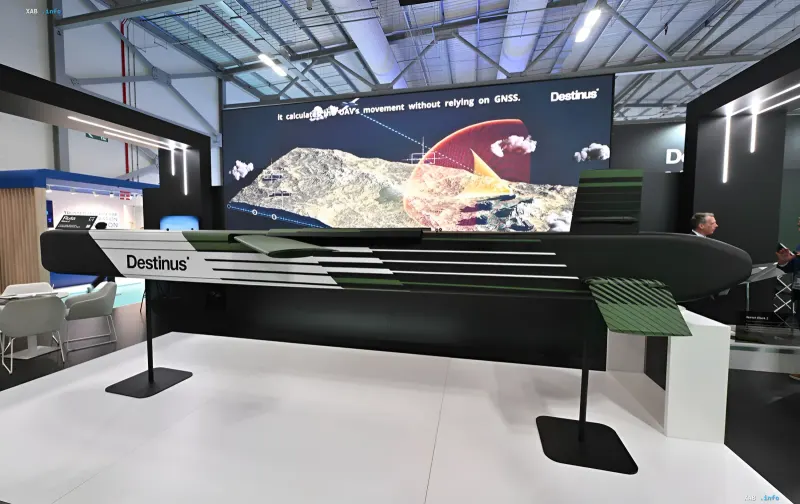
The Russian Embassy in the Netherlands has officially demanded clear explanations from the Dutch government regarding publications about the potential direct involvement of defense company Destinus employees in launching strike drones from Ukrainian territory. The diplomatic inquiry was prompted by a months-long investigation by the Dutch newspaper NRC, in which journalists claim that company representatives were present in Ukraine and took a direct part in launching drones, including at targets on Russian territory. This was reported by RBC-Ukraine citing NRC and the Anadolu agency.
NRC Investigation: From Kharkiv to Voronezh
According to the publication, at various times at least 40 Destinus employees may have visited Ukraine, allegedly tracking Russian Shahed-type drones and directly participating in launching strike drones. Specifically, in June 2023, a group of company employees arrived in the Kharkiv direction, where, according to NRC, they prepared test drones with explosives, targeted a military airfield near Russia's Voronezh, and personally oversaw the launch. On the same day, according to the newspaper, the drone hit an apartment building in Voronezh, injuring three people. Destinus employees, NRC reports, suggested this might have been a drone of their manufacture.
State Support and Expert Assessments
According to the same publication, the Dutch government placed an order with Destinus worth hundreds of millions of euros and provided drone export permits. International humanitarian law experts interviewed by NRC believe that the described actions of the company's employees could be classified as "direct participation in hostilities." Military law professor Liesbeth Zegveld warned that supporting such companies could lead to the Netherlands effectively being drawn into the armed conflict.
Destinus's Reaction and Moscow's Position
The company's founder, Russian-born Mikhail Kokorich, stated that Destinus does not conduct military operations: according to him, targets are determined by the Ukrainian army, and company employees only provide technical support within the framework of concluded contracts. The Russian Embassy, as Anadolu reports, stated that it had carefully studied the reports in Dutch media and called "revealing" the assessments of experts classifying the described personnel activities as direct participation in hostilities. Diplomats referred to the Geneva Conventions, emphasizing that civilians taking a direct part in hostilities lose protection from attack. The Russian side questioned how aware the Dutch authorities are of the company's activities and whether they exercise proper control, stating that it "expects to receive clear explanations from official The Hague."
Context: Production and Incident in Kyiv
Separately, the material mentions that at the end of October, Destinus announced the production of over 1,750 Ruta cruise missiles with a monthly volume of nearly 300 units—according to Reuters, this exceeds Europe's entire production volume for the year prior to Russia's full-scale invasion. In September at the MSPO-2026 exhibition in Poland, the company revealed the characteristics of the Ruta Block 3 missile with a range of over 2,000 km for the first time and announced its intention to deploy a fully independent European production of these systems. In addition, Dutch Foreign Minister Tom Berendsen reported that a projectile hit the rear part of the Dutch embassy building in Kyiv; according to him, none of the mission's staff were injured, and the building sustained minor damage.