
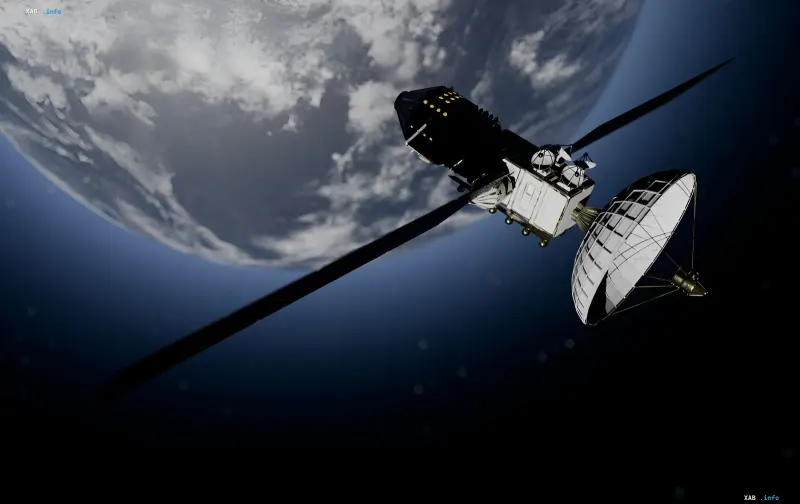
Russia is likely preparing a massive launch of satellites for the 'Rassvet' communication system — its own analogue of Starlink. According to preliminary data, the launch of one or two carrier rockets is scheduled between July 11 at 21:00 UTC and July 16 at 21:00 UTC from the Plesetsk Cosmodrome.
Technological breakthrough and military application
Last month, Russian President Vladimir Putin stated that the country is actively working on deploying a constellation of low-orbit satellites. The key task of this initiative is to ensure the control of 'heavy drones'. This refers to the 'Rassvet' system developed by 'Bureau 1440'.
The system's terminals, like their American Starlink counterparts, are based on active phased array antenna technology. This allows devices to automatically establish and maintain communication with a satellite without complex user configuration.
Project development timeline
The history of the constellation's creation includes several stages of testing and scaling:
- 2023: The first three satellites were launched into orbit from the Vostochny Cosmodrome as part of the 'Rassvet-1' mission. At this stage, the spacecraft were used exclusively for communication tests.
- May 2024: As part of the 'Rassvet-2' mission, three more satellites were launched into orbit. These were already full-fledged prototypes of serial products, on which support for the 5G NTN (Non-Terrestrial Networks) standard and laser communication channels between satellites were successfully tested.
- March 23, 2026: 'Bureau 1440' announced the launch of 16 satellites at once, which will form the basis of the future system. The launch was delayed by about three months due to production issues.
Strategic goals and military context
According to the Russian federal project 'Internet Access Infrastructure', the deployment of the 'Rassvet' system implies a phased increase in the constellation. Even partial implementation of plans for 2026–2027 will allow the Russian army to obtain reliable satellite communication similar to Starlink, which can be used to control strike unmanned aerial vehicles.
The relevance of the project is confirmed by events on the front. Earlier, the Pentagon stated that at the beginning of this year, Ukraine managed to retake about 400 square kilometers of territory from the RF after Starlink internet became unavailable to Russian military forces. Creating its own independent communication system has become a matter of strategic necessity for Moscow.


