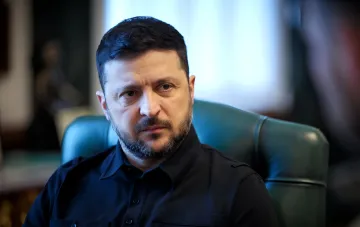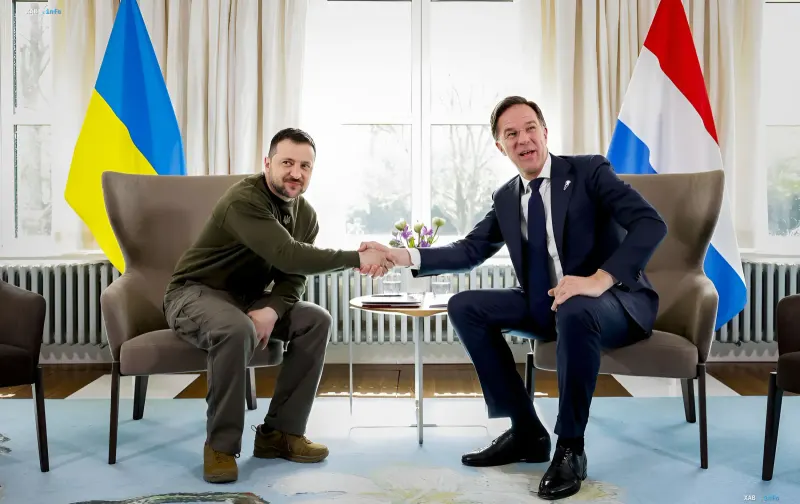
Following a meeting with NATO Secretary General Mark Rutte, President of Ukraine Volodymyr Zelenskyy announced that the Alliance has expressed its readiness to assist Ukraine with PAC-2 and PAC-3 anti-aircraft missiles to strengthen air defense. The President announced this on his official Telegram channel, as cited by RBC-Ukraine. Zelenskyy thanked Rutte for his "unwavering support in defending the Ukrainian sky" and emphasized that right now, amid the intensification of trilateral negotiations, it is critical that Ukrainian air defense launchers do not remain empty.
The scale of strikes and interceptor shortages
The President described the current situation as "extremely difficult" due to massive Russian attacks. According to him, in the first week of November alone, Russia fired 115 missiles of various types at Ukraine, as well as thousands of guided aerial bombs and "Shahed" jet drones. Zelenskyy noted that in addition to the constant shortage of anti-ballistic missiles, which he estimates Russia is exploiting to strike energy infrastructure, new technical difficulties have emerged: interruptions in the Starshield system along the frontline and in temporarily occupied territories, which, according to the President, hinder the interception of jet drones.
"Artificial restrictions do not work for peace"
Commenting on NATO's readiness to provide PAC-2 and PAC-3 missiles, Zelenskyy stated: "Artificial restrictions do not work for peace — they work for the aggressor. Thank you, Mark, for the readiness to help with PAC-2 and PAC-3." These words came in the context of Kyiv's assessment that any restrictions on air defense supplies weaken Ukraine's ability to protect civilian infrastructure and the population at a time when, as the President notes, trilateral negotiations are underway.
Context: European allies are exhausting their own stocks
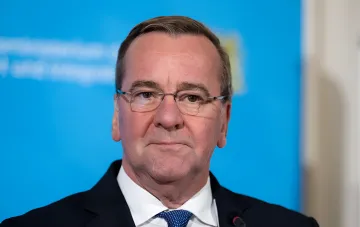
NATO's announcement of readiness to help with Patriot missiles comes amid reports that European allies are facing a shortage of air defense assets to pass on to Ukraine. According to available data, Italy has exhausted its stock of Aster anti-aircraft missiles for Ukraine and may suspend supplies, shifting its focus to delivering generators and equipment to restore energy grids. A similar situation has occurred in Germany regarding US air defense systems: earlier, German Defense Minister Boris Pistorius stated that Germany can no longer supply Ukraine with additional Patriot systems, as it has already transferred several such units and their associated missiles, exhausting its own capabilities.
What this means for air defense
Thus, NATO's readiness, expressed through the Secretary General's office, is aimed at compensating for the growing shortage of interceptors, which, according to Zelenskyy, is exacerbated both by the intensity of Russian strikes and by technical failures in communication and control systems. The transfer of PAC-2 and PAC-3, if implemented, should allow for the replenishment of Patriot launchers and reduce the vulnerability of energy infrastructure, which, according to Kyiv's assessment, Russia is deliberately targeting by exploiting Ukraine's lack of anti-ballistic defenses.