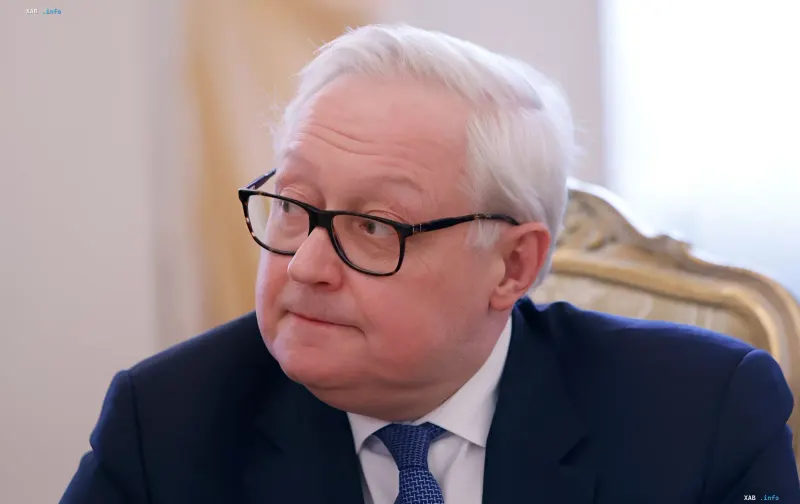
Russian Deputy Foreign Minister Sergey Ryabkov has publicly stated that the presence of a NATO representative at the trilateral peace talks in Abu Dhabi, held on November 10–11, 2026, had a positive impact on the course of the discussions. According to the Russian diplomat, the Supreme Allied Commander Europe of NATO, Alexus Grinkevich, "added a serious measure of professionalism from the West to the discussions." The statement came against the backdrop of growing international interest in attempts to resolve the Russian-Ukrainian conflict and became one of the first public assessments of a negotiation format in which the alliance's military leadership found itself at the same table as the Russian delegation.
"Super-professional" work of military representatives
Ryabkov emphasized that the Russian military representatives who were also present at the Abu Dhabi meeting were "fully in command of all this material and worked in a super-professional manner." Thus, the Russian Deputy Foreign Minister effectively admitted that the format of the negotiations, which included a military component from both sides, allowed for a more substantive level of discussion. The diplomat did not disclose specific topics addressed within the military track, but emphasized that the professional level of the discussion was sufficient to form working approaches.
The "drive" of the American side
Separately, Ryabkov focused on the role of President Donald Trump's team in finding ways to end the war. "It is impossible to deny the presence of drive on the part of the US in searching for solutions to the Ukrainian settlement," the Russian diplomat stated. According to him, the American side is demonstrating an active stance in developing practical proposals. Earlier, US Presidential Special Envoy Steve Witkoff, who also participated in the Abu Dhabi talks, publicly announced that peace was nearing, which, according to Ryabkov's assessment, confirms the existence of political momentum in the process.
The condition: "political will" and no illusions
Summarizing the results of the two-day meeting, Ryabkov formulated the condition under which, in his view, practical results can be achieved: "To build something that would be functional, to be without illusions regarding what can be achieved, and at the same time to avoid uncontrolled escalation, taking into account yesterday's and the day before yesterday's discussions, I think, given the proper political will, it is possible." The diplomat thus outlined three key parameters: the functionality of the agreements, a sober assessment of realities, and the inadmissibility of an uncontrolled escalation scenario.
Context: a new stage of negotiations
The trilateral meeting in the Russia-Ukraine-USA format took place in Abu Dhabi on November 10–11, 2026; Sergey Ryabkov was a member of the Russian negotiating team. In parallel with his assessments, Finnish President Alexander Stubb announced a new stage of peace talks to end the war, which indicates the parties' intention to continue the negotiation process in an expanded or modified format. Thus, the Abu Dhabi round, judging by the public statements of all three parties, was regarded as a working, not a formal one, and laid the foundation for subsequent contacts.