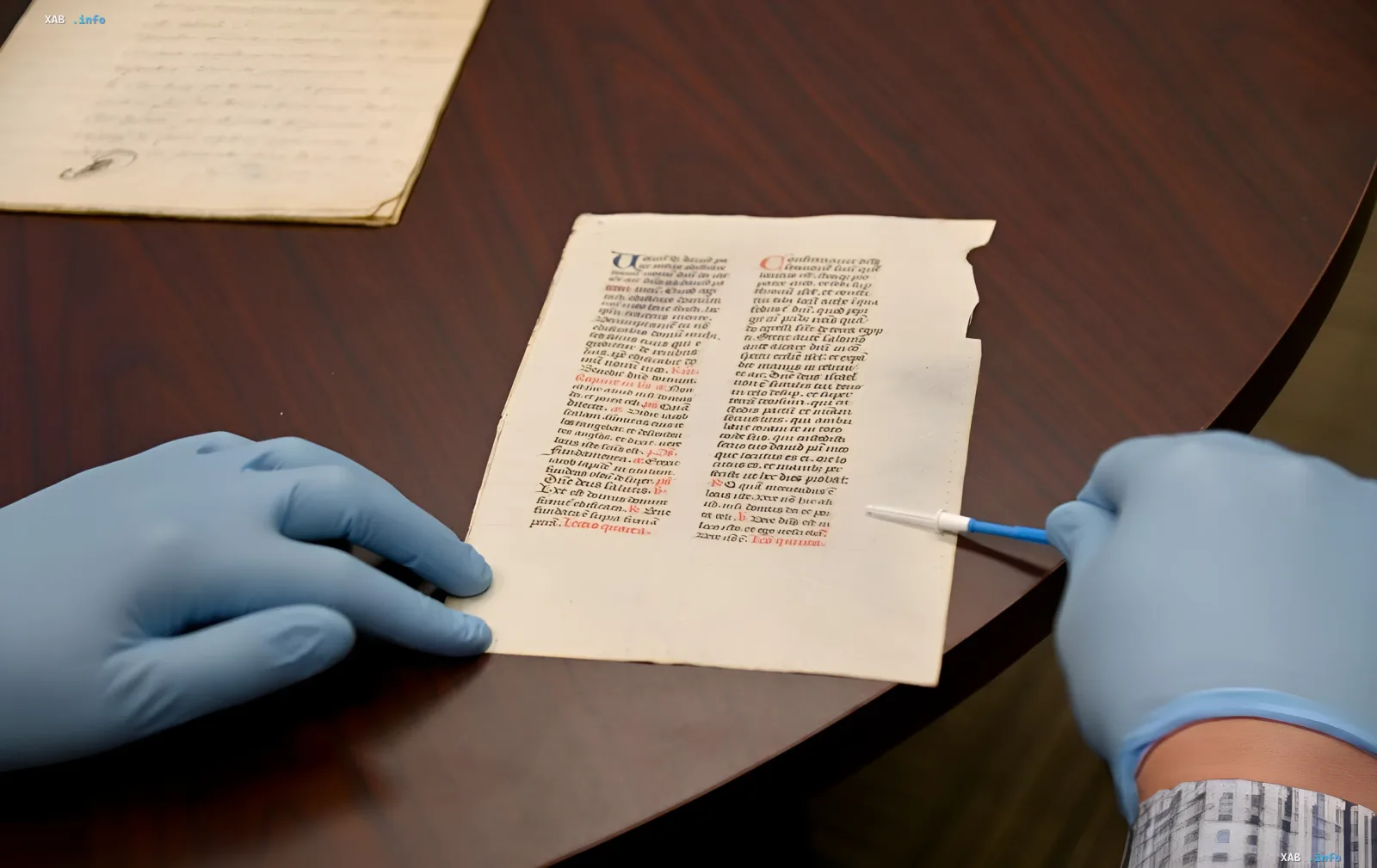
Human history, recorded on parchment, hides secrets that cannot be deciphered by simply reading the text. American scientists have made a breakthrough by developing a safe method for collecting DNA from old manuscripts. This technology allows the extraction of genetic material from the animal skins that served as the basis for the pages, without causing any harm to these unique artifacts.
The End of the Era of Destructive Research
For decades, the main obstacle to the genetic analysis of ancient documents was the fear for the preservation of cultural heritage. Traditional methods required researchers to cut or scrape off small fragments of parchment. This permanently damaged unique artifacts, making many museums and archives categorically opposed to conducting such experiments.
The new approach, published in the journal Manuscript Studies, completely resolves this dilemma. Scientists have found a way to obtain invaluable data while leaving the pages of books untouched.
A Medical Tool for Historians
The essence of the method is simple, yet ingenious. To collect samples, researchers use dry cytology brushes—the same tools used in medicine to take swabs. The process looks like this:
- The scientist carefully and delicately runs the brush over the surface of the manuscript page.
- The tool collects microscopic remnants of cellular material that have been preserved in the animal skin structure since the parchment was produced.
- The integrity and structure of the document itself remain undisturbed.
Testing on 91 Manuscripts
The effectiveness and safety of the technology were confirmed during large-scale trials. Scientists tested the method on 91 manuscripts from the Duke University library collection. The sample included documents created between the late 8th century and the early 20th century, ranging from England to Ethiopia. In all cases, the parchments remained absolutely unharmed.
After collecting the biomaterial from the brushes, next-generation sequencing technologies, usually used in forensics, come into play. They allow for the isolation, restoration, and amplification of the obtained genetic sequences, turning microscopic traces into a clear genetic profile.
Parchment as a Data Archive
Since parchment has been made from the skins of domestic animals (sheep, goats, calves) for millennia, the DNA hidden within it represents a huge and previously inaccessible archive of empirical data. The new method opens up vast horizons for historians and biologists:
- Precise Dating and Localization: Establishing the time and geographical region where a specific manuscript was produced.
- Mapping the Ancient World: Tracking trade routes along which writing materials were transported.
- History of Biology: Studying the evolution of domestic animal breeds, the development of agricultural practices, and the history of disease spread among livestock.
The authors of the study hope that the proven safety of their method will help win the trust of major museums and archives around the world. Scientists believe this will turn thousands of closed historical repositories into full-fledged genetic laboratories, uniting the efforts of biologists, archaeologists, and medievalists to uncover the secrets of the past.


