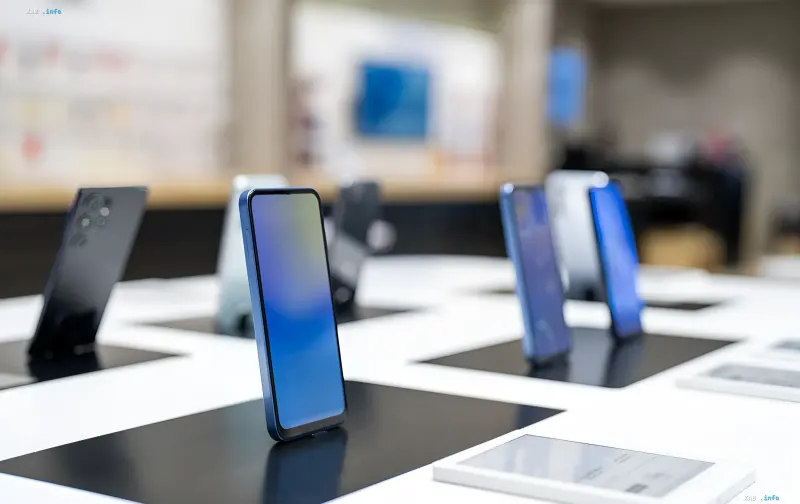
In October 2026, South Korean corporation Samsung announced a large-scale price hike for its key product lineup, affecting both premium flagships and budget solutions in the Galaxy series. Price adjustments impacted at least seven current models, marking the manufacturer's second major cost revision of the year. Recall that back in April, the company raised prices on specific high-capacity configurations for devices such as the Galaxy Fold 7, Z Flip 7, S25 FE, and S25 Edge, though those changes were primarily targeted.
A New Wave of Price Increases for Galaxy S26 Flagships
The flagship Galaxy S26 lineup experienced significant price hikes worldwide: every modification increased by at least $100. The base Galaxy S26 with 256 GB of storage is now retailed at $999.99 instead of the previous $899.99 (with official Ukrainian retail prices starting at 42,299 hryvnias). The 512 GB version rose to $1,199.99. Older Galaxy S26 Plus configurations also increased by $100, while the premium Galaxy S26 Ultra 1 TB version received a record $200 markup, reaching $1,999.99 compared to the initial $1,799.99.
Price Growth in Budget Devices and the Galaxy A17 5G Record
Price pressures also affected the affordable market segment. Mid-range and budget models, including the popular Galaxy A57, A37, and A27 series, demonstrated noticeable cost increases. Analysts paid special attention to the ultra-budget Galaxy A17 5G smartphone. Since its January launch in the US market at an initial price of $199.99, this device has undergone price revisions twice—in August and October of this year. As a result, over the incomplete year of 2026, the cumulative price growth for this model reached about 35 percent, touching $269.99 for the 128 GB configuration.
Contradictory Data
While official representatives and analytical agencies record a global price increase for Samsung hardware, the expert community remains divided regarding the viability of such purchases. Some analysts claim that the price hike makes last year's S25 series flagships more attractive to consumers, especially given the upcoming rollout of key software features to older devices. Other experts point out the geographical unevenness of price spikes: while adjustments in the US and Europe are planned, the pace of price increases in China and Ukraine is driven by additional logistical and local economic factors, creating discrepancies in final retail costs.
Market experts note that Samsung's pricing policy could significantly alter the balance of power in the mobile device premium segment ahead of the New Year holidays. Buyers are increasingly turning to alternative brands or waiting for seasonal sales, yet sustained demand for the Galaxy ecosystem allows the South Korean giant to maintain its leading position despite continuous price growth.