
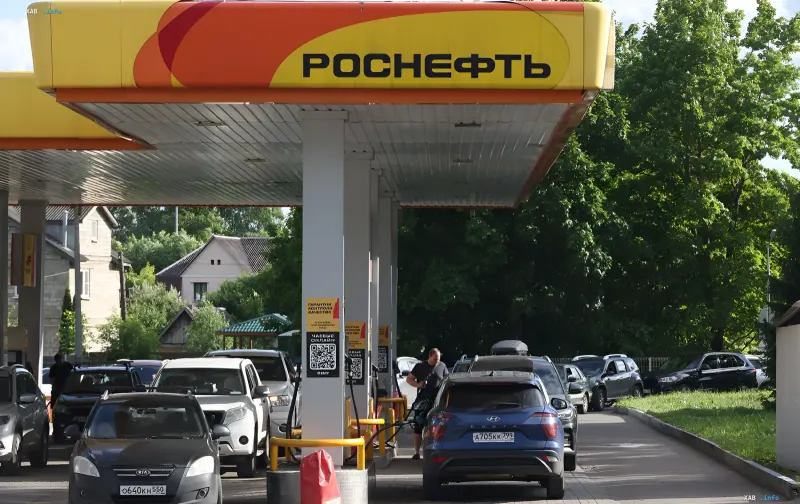
The situation regarding the availability of automotive fuel in Russia has reached a critical point. The shortage of fuel has reached such proportions that queues of vehicles in front of gas stations are now visible even on satellite imagery. This is reported by RBK-Ukraine, citing materials from the BBC Verify verification service.
Kilometer-long traffic jam in Zabaykalsky Krai
In a satellite image taken by Airbus on the morning of July 3, a huge queue is clearly visible at a Rosneft gas station in the settlement of Atamanovka in the Zabaykalsky Krai. Satellite data expert Paul Brown confirmed the authenticity of the image, noting that the accumulation of vehicles in front of the station is visually confirmed.
This incident is merely the tip of the iceberg. Previously, video recordings from the same location, dated July 2, were published online. They captured a vehicle column approximately 4.5 kilometers long. According to estimates, at least 635 vehicles were in this queue waiting for the opportunity to refuel.
Geography of the shortage
The problem is not limited to a single region. Journalists have already verified video recordings of similar queues at gas stations in 13 regions of Russia, including Moscow and the Moscow region. The situation began to deteriorate rapidly at the end of June and early July 2026, affecting more than a dozen subjects of the country.
Due to the fuel shortage, local authorities have been forced to deploy additional forces to maintain order. Police units, Cossacks, and representatives of public organizations, such as the "Russian Community," are on duty at gas stations to control queues and prevent chaos.
Causes and consequences
In June, Russian leader Vladimir Putin publicly acknowledged the existence of a fuel shortage in the country. He linked the problems to strikes by the Ukrainian Defense Forces on critical infrastructure. Specifically, it was noted that in temporarily occupied Crimea, fuel reserves had dwindled to a few days' supply against a monthly requirement of 70,000 tons.
The situation was exacerbated by a new wave of strikes on oil refineries (ORs). Since the beginning of 2026, Ukraine has launched more than 50 strikes on Russian oil facilities. This has led to a sharp spike in prices: the average cost of a liter of gasoline reached 72.38 rubles, and diesel fuel — 84.84 rubles. This is the largest weekly price increase in at least the last 20 years.
Novorossiysk and fuel cards
The situation became particularly acute in early July in Novorossiysk, which was left completely without gasoline for ordinary consumers. Refueling became possible only using special fuel cards intended for official transport of legal entities. At local gas stations, due to panic among drivers and huge queues, police units and volunteers had to be deployed to organize the process.


