
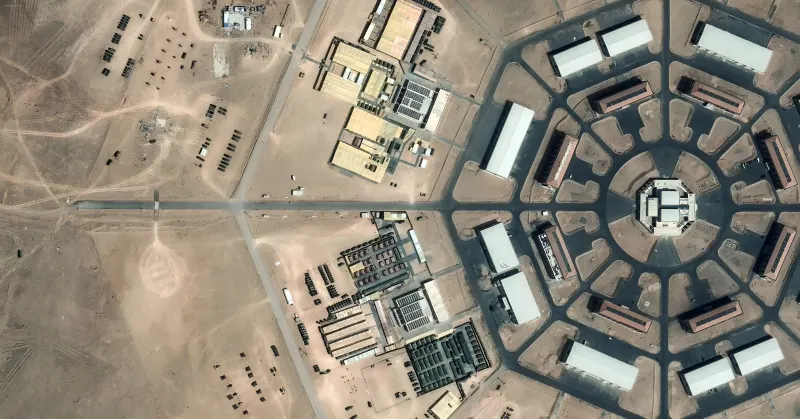
In remote areas of the Chinese desert, hidden from the eyes of ordinary observers, a colossal military complex is taking shape. Satellite imagery, analyzed by experts, reveals that Beijing is creating an extensive network of launch pads, bunkers, and communication hubs. The main goal of this large-scale construction is to ensure that no attempt at a preemptive strike by the United States can disable China's strategic nuclear forces.
Creating an Impenetrable Network
Although Chinese missiles have long been capable of reaching any point on the territory of the United States, the new infrastructure is designed to ensure their survivability. In the area of the Hami nuclear test site, located in the remote northwestern region of the country, the construction of more than 80 launch pads has been recorded. A complex defense system is being built around them, including three unique octagonal structures which, according to analysts, serve as command centers and personnel housing.
These sites are intended not only for mobile missile complexes but also for air defense systems, electronic warfare means, and satellite communications. The scale of the work, covering thousands of square kilometers of desert, indicates Beijing's transition to creating a deeply echeloned system for protecting its strategic forces.
Guaranteeing a Retaliatory Strike
The key element of China's nuclear doctrine remains the concept of a "guaranteed retaliatory strike." The ability to withstand a first strike and launch a counterattack is the foundation of their deterrence. Forces stationed in silo installations in the Xinjiang and Gansu provinces are the core of the arsenal. The new network of concrete pads and bunkers is intended to diversify these capabilities, making them less vulnerable to the enemy's high-precision weapons.
Alexander Nile, an expert from the Pacific Forum think tank, notes that we are witnessing an unprecedented expansion of infrastructure. This is not just an increase in numbers, but a qualitative change in the architecture of strategic deterrence, aimed at making China's nuclear potential invulnerable.
Geopolitical Context
This military boom is taking place against a backdrop of rising tensions around Taiwan and a lack of transparency regarding Beijing's nuclear intentions. Despite the official policy of "no first use of nuclear weapons," Western diplomats fear that China may use the nuclear threat as a tool of pressure to limit the intervention of external forces in the conflict over Taiwan.
The most alarming aspect of this situation is Beijing's silence. The Chinese Ministry of Defense does not comment on these developments, and the Pentagon refrains from commenting on intelligence data. Meanwhile, new concrete rings continue to grow in the desert, symbolizing a new round of the arms race between the two superpowers.


