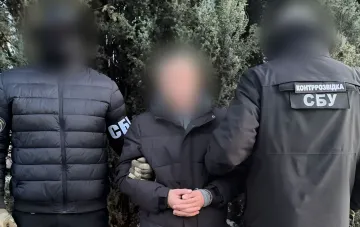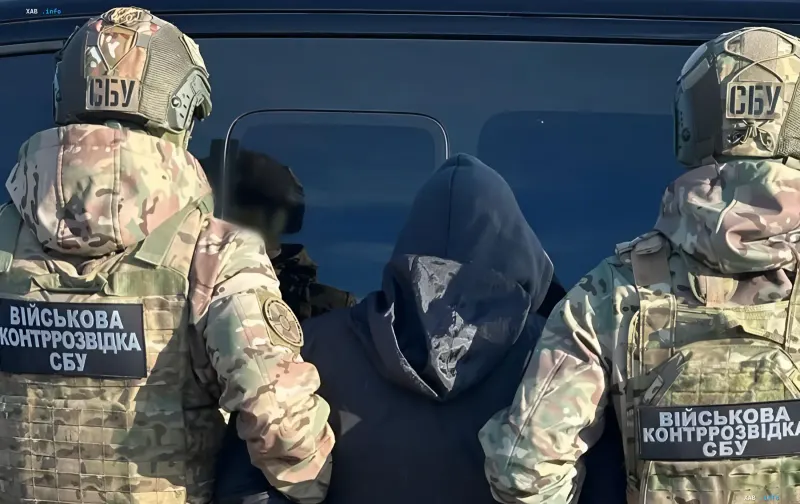
The military counterintelligence of the Security Service of Ukraine (SBU), with the support of the Commander-in-Chief of the Armed Forces and the Special Operations Forces command, prevented a contract killing of the commander of one of the most highly classified units of the Defense Forces. As part of the operation in Khmelnytskyi, an agent of the Russian military intelligence (GRU) was arrested, who, according to investigators, planned to liquidate a Special Operations Forces (SSO) squad commander. According to the agency, the perpetrator had rigged a car he was allegedly using with explosives and left it near the entrance of a high-rise building where the Ukrainian officer lived.
Improvised device and sabotage plan
According to the investigation, an improvised explosive device (IED) was built into the car door, containing approximately 500 grams of plastic explosives, 10mm metal balls, bearing rollers, and lead elements. Following the instructions of Russian special services, the agent was to remotely detonate the bomb at the moment the Ukrainian officer walked past the car. To record the planned murder, the perpetrator equipped another vehicle with a dashcam featuring remote access — this is how Russian intelligence wanted to obtain footage of the explosion. Later, according to the investigation, the occupiers intended to use the video of the terrorist attack for information and psychological operations aimed at destabilizing the situation within Ukraine.
Recruitment: from Telegram channels to the task in Khmelnytskyi
The investigation established that the assassination was prepared by a GRU-recruited former contract soldier from Kharkiv who had been discharged in 2024 for health reasons. He came to the attention of Russian special services while looking for quick money in thematic Telegram channels. After recruitment, he was tasked with his first mission — to gather information on the location of backup command posts and parking spots of Defense Forces vehicles in the regional center. Then, Russian intelligence sent the agent to Khmelnytskyi to organize the murder of the SSO unit commander.
The operation and moment of arrest
Preparing for the task, the man rented an apartment near the Ukrainian officer's house and installed a dashcam on the balcony to monitor the officer's daily schedule and travel routes. After that, the agent retrieved the car door with the pre-built IED from a cache and, in a rented garage, installed it on a crossover he had previously brought from Kharkiv, along with another car intended for recording the blast. SBU officers uncovered the enemy's plans well in advance: the agent was arrested near the site of the planned explosion just as he was about to press the remote control button. For murdering the Ukrainian officer, Russian handlers promised him an urgent evacuation to Russia through third countries and assistance in obtaining Russian citizenship.
Charges and procedural status
During searches, a smartphone with anonymous chats was seized from the detainee; the suspect periodically changed these to hide contacts with GRU representatives. SBU investigators notified the man of suspicion under Part 2 of Article 111 of the Criminal Code of Ukraine — high treason committed under martial law. He is currently in custody without the right to bail; under the incriminated article, he faces life imprisonment with confiscation of property. The operation was conducted by SBU military counterintelligence together with investigators from the SBU Office in Kharkiv Oblast, with procedural guidance provided by the Kharkiv Regional Prosecutor's Office. Previously, according to RBC-Ukraine, a student was arrested in the Ivano-Frankivsk region for a series of car arson attacks ordered by Russia, and last month in Kyiv, the SBU arrested an FSB agent who, according to the agency, planned to massively activate satellite stations for Starlink to support occupying forces.