
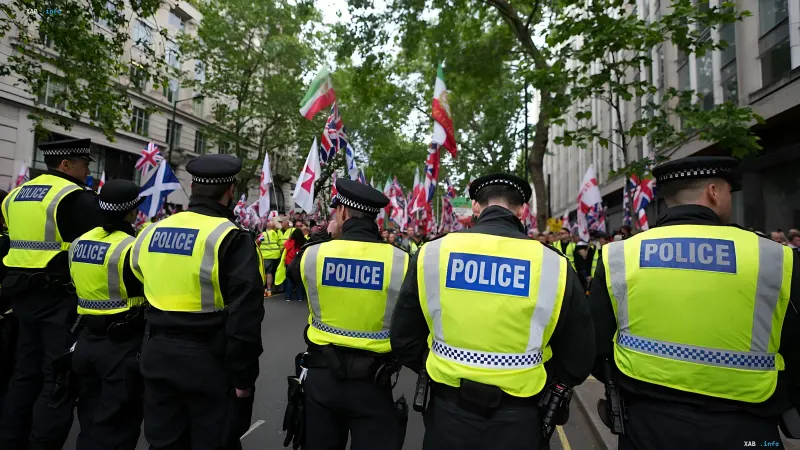
In the streets of Southampton, a city in southern England, a storm of protest has erupted. Hundreds of demonstrators, armed with homemade placards and flags of the United Kingdom, have besieged the local police station. Slogans like "Racist police, get off our streets!" and "Henry's blood is on your hands!" echoed through the neighborhood. Emotions were at a breaking point: people demanded justice and shouted "Shame on you!".
This action was a direct response to a tragic event that shocked the United Kingdom. The day before, a court had delivered a verdict in the case of the murder of 18-year-old student of Polish origin, Henry Nowak. The trigger for the riots was not only the death of the young man but also the shocking truth about how the police initially reacted to the incident.
The Lie That Became Fatal
The tragedy unfolded on the evening of Friday, December 3rd of last year. Henry Nowak was returning from a football match when his path crossed with Vikram Digwa. The meeting of the two young men ended fatally, but the initial version of events, which the police accepted at face value, turned out to be fundamentally wrong.
Vikram Digwa, a British Sikh, told law enforcement officers that Nowak, being drunk and aggressive, had attacked him first, using racist expressions directed at his traditional turban. The killer's brother even called the police, reporting a hate crime. Officers arrived at the scene and, believing the accusation, handcuffed Nowak, who was lying on the ground, mistaking him for the attacker.
Only a careful analysis of the evidence — recordings from body cameras, data from the victim's phone, and autopsy results — revealed the true picture. Henry was not drunk: the alcohol concentration in his blood was below the permissible limit for driving a car. Audio recordings found on Digwa's phone confirmed only a casual exchange of words, where the boy asked if the Sikh was a "bad person," to which the latter confirmed. No verbal insults or aggression on Nowak's part were recorded.
Death in Handcuffs
Reality turned out to be horrifying. Vikram Digwa stabbed Nowak several times. On the recordings, it can be heard how the bleeding young man repeatedly told the police that he had been stabbed and could not breathe. In response, the officers claimed that no one had attacked him. Henry lost consciousness and died, despite attempts by medics to help him.
Justice William Mauley, considering the case, stated: "I am sure that Henry said nothing racist." According to him, the version of a racist attack came exclusively from Digwa and was not supported by other testimonies. The judge also noted that the killer showed "callous disregard" for Nowak's life.
Verdict and Consequences
On May 28, the jury found Vikram Digwa guilty of murder. He was also charged with perjury, which led to the student's death. On June 1, the court sentenced him to life imprisonment with a minimum term of 21 years before being eligible to apply for parole.
Responsibility was also borne by the killer's 53-year-old mother. The investigation established that she had hidden the knife used in the attack and helped her son cover up the traces of the crime. The woman was convicted of aiding and abetting, although her final sentence is to be announced on July 17.
The father of the deceased student, who had previously remained silent, spoke in court accusing the law enforcement agencies. He stated that his son did not receive the necessary help and died in inappropriate conditions, subjected to inhumane treatment. A separate investigation is being conducted against the police officers who were at the scene of the crime. The British police have officially apologized to the Nowak family.
Scale of the Scandal
The Henry Nowak case has caused a wide public resonance, comparable to high-profile trials in the USA. Many commentators, including Defence 24 portal expert Dr. Alexander Olech, draw parallels with the death of George Floyd. As in the case of Floyd, the indirect cause of death was the inaction and errors of the police during the arrest, which led to mass protests and the emergence of the Black Lives Matter movement.
In Southampton, the protests turned into riots. After the rally at the station, the crowd headed towards the home of the Digwa family. The police were forced to hold back people trying to enter the street where the killer lives. The conflict escalated into violence: protesters threw bottles, beer cans, and trash cans at law enforcement officers.


