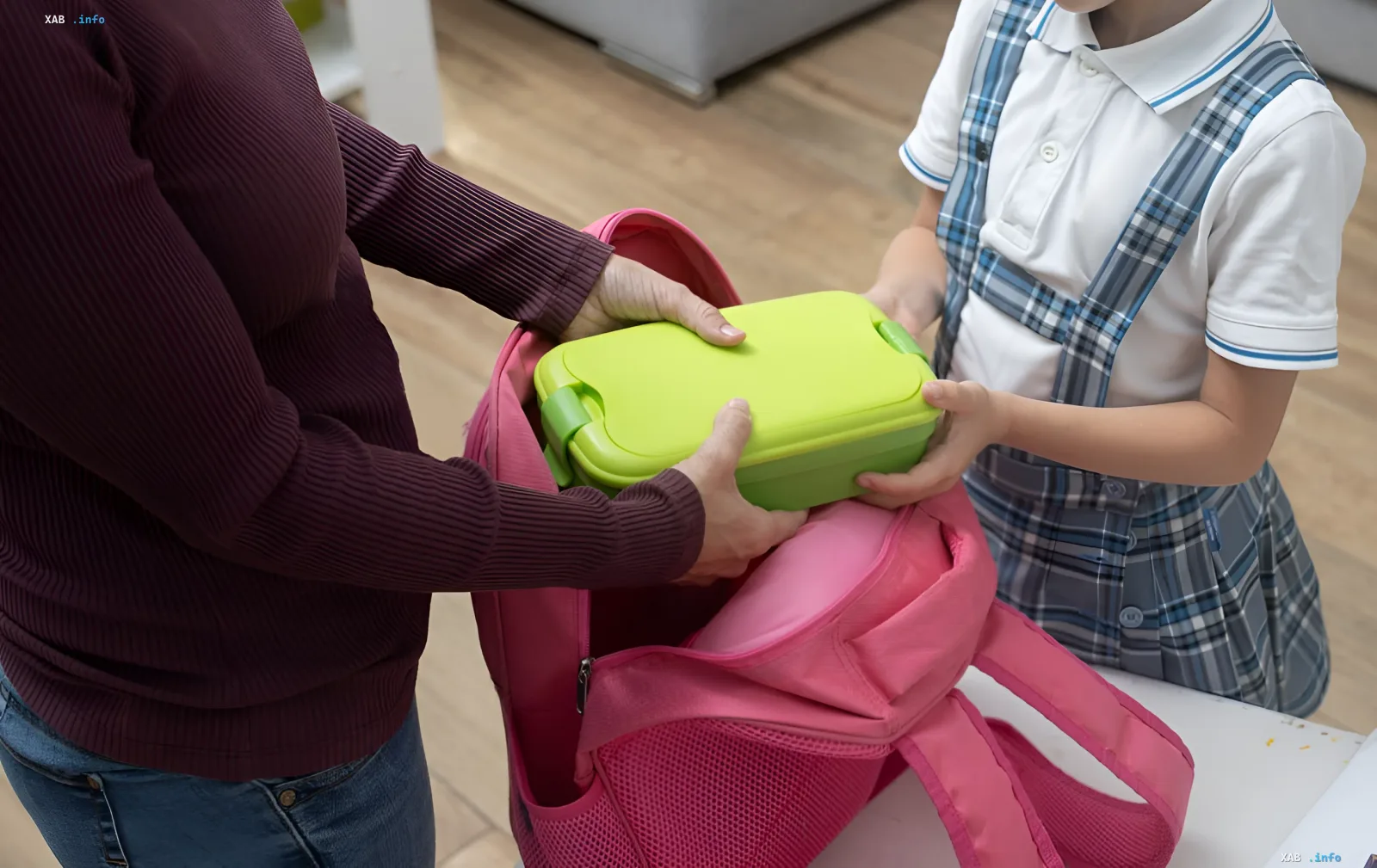
Getting a child ready for school and fitting a full day's worth of food into a lunchbox is a morning quest in which some items vanish in minutes while others travel in the backpack for weeks almost untouched. The publication Styler gathered practical tips from moms on the social network Threads — no complex recipes or "pretty pictures" that no one has time to recreate at seven in the morning. The main takeaway running through all the stories is extremely simple: don't pack what your child doesn't like, even if it seems like the perfect snack to you. "Let's pack for lunch what they love and will definitely eat," advises one of the moms, who discusses in advance with her daughter what she would like to take to school. Another sticks to an even stricter rule: if you pack what kids love, the lunchbox reliably comes back empty.
What Actually Works in a School Backpack
The comments show that schoolchildren don't need a restaurant menu. Among the reliably "disappearing" foods, moms mention apples, grapes, crackers, homemade cookies, pancakes, cottage cheese casserole, muffins, and toast. Dry crackers are especially valued: they don't cause odor problems and are convenient as a quick snack. At the same time, experiments with unfamiliar foods more often end in failure, so it's more practical to make a list of five to seven dishes the child definitely eats and simply rotate them. Presentation matters too: think not only about taste but about how exactly the child will eat the food at school. It's better to slice an apple, and to cut vegetables for a sandwich into thin slices — one of the moms uses a peeler so the cucumber comes out as thin as possible. Dishes that can be eaten without utensils go down well: toast, burgers, homemade wraps, pancakes, and crackers.
Form Matters More Than Filling
If a child is tired of ordinary sandwiches, you don't have to invent a new filling — sometimes it's enough to present the familiar one differently. One of the moms made homemade burgers or something like wraps for her kids: lavash or a bun, meat, a cutlet, a sausage or chicken fillet, vegetables, cheese, and sauce. In her words, the kids ate such lunches very enthusiastically and sometimes shared them with classmates. A separate nuance is sharing. One mom told how her daughter loves onigiri, so she packed a double portion: classmates happily helped themselves. If a child regularly shares food with friends, it's worth taking that into account and packing a little more of the favorite snack, even if the lunchbox itself doesn't have to be huge.
When a Food Item Is Better Left Out
It's important to look honestly at what comes home. One of the moms admitted that a toast with ham and cheese is a 50/50 option: the child either eats it or brings it back. Another told a telling story: croissants, apples, and cabanossi could be pulled out of the lunchbox by the time the food started to smell unpleasant. The conclusion is simple: if a child often returns a certain food item, don't keep packing it "just in case," especially if the snack requires proper temperature storage. Also, don't repeat the same combination every day — multi-layer sandwiches made from toast bread, meat, cottage cheese, cucumber, and salad, which were at first eaten with pleasure, stopped working after about two months. Today it's toast with ham and cheese, tomorrow a cheesecake with jam, the day after pancakes or fruit.
Handing Responsibility Over to the Child
Perhaps the most practical life hack of all is to gradually hand the child some responsibility for their own lunch. The mom of a seventh grader told how she used to pack her son's box herself, but the food often came home. Now they discuss in the evening what to take, and the schoolboy assembles his lunchbox himself: he knows exactly what he packed and better understands his own food preferences. For younger children, this can be done together — offer two or three options and let them pick one. A school lunchbox is not a contest for the prettiest snack and not another task for mom in the list of morning chores. The child will show what works for them: sometimes it's enough to simply look carefully at what comes home and what disappears before the long break. And it is precisely this approach, judging by the moms' stories, that saves not only food but also a lot of mom's nerves.