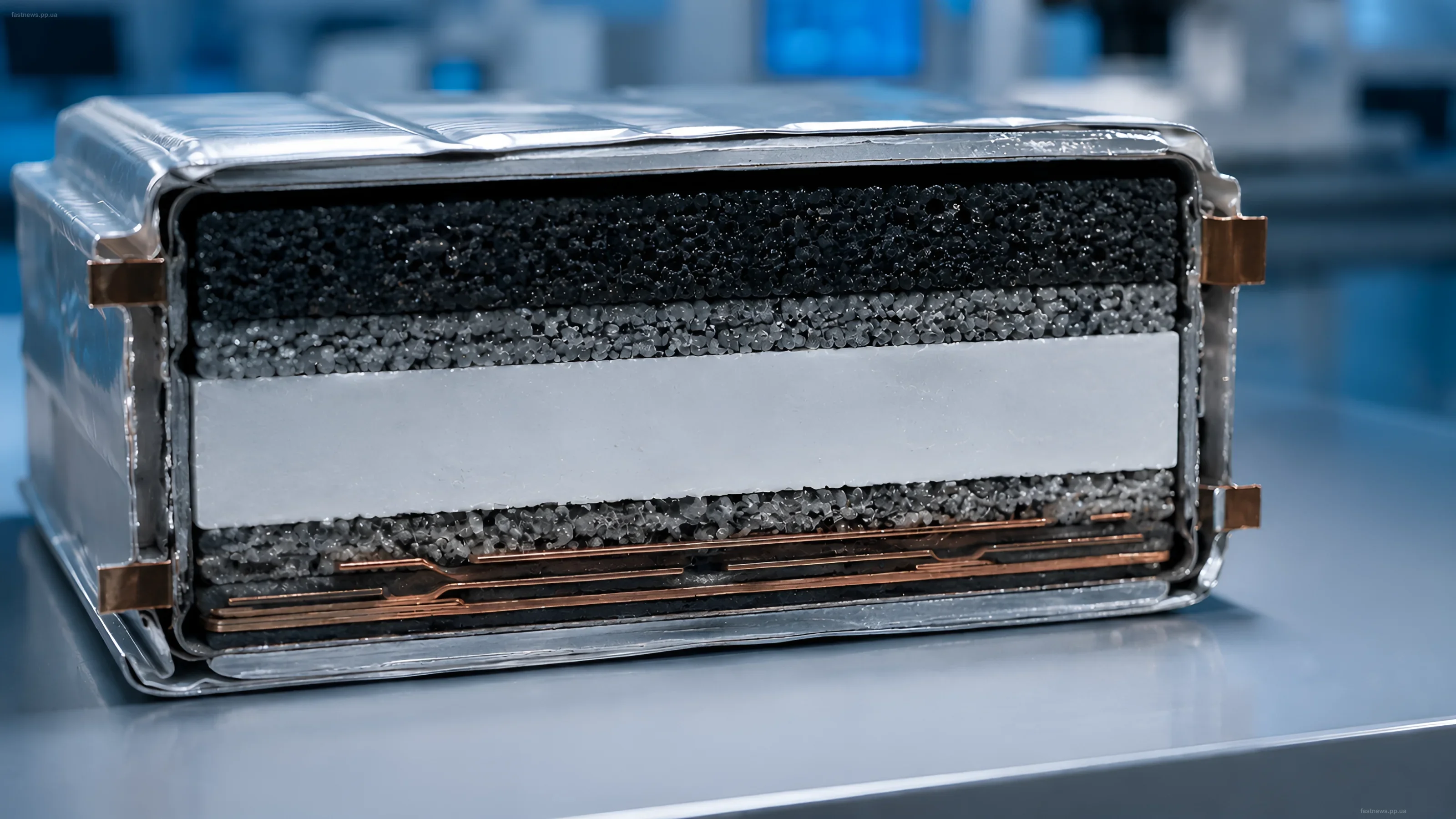
Sodium-ion batteries, which promise to become a cheap and accessible alternative to lithium batteries, have finally overcome the main obstacle on the path to mass adoption. Scientists from the National University of Singapore have developed a new type of solid-state battery that lasts almost 10 times longer and is significantly safer than its predecessors.
The problem solved for years
The main "Achilles' heel" of modern sodium-ion batteries is the electrolyte. Liquid options, although cheap, are fire-hazardous, while solid-state ones suffer from low conductivity and instability. When in contact with metallic sodium, they degrade quickly, and dendrites — microscopic needles that can puncture insulation and cause a short circuit — form on the electrodes.
A brilliant solution from ordinary urea
Singaporean researchers found an elegant way out. They added ultrathin sheets of graphitic carbon nitride — a material that can be obtained from ordinary urea — to the polymer electrolyte. This not only reduced production costs but also radically changed the properties of the battery.
Results that change the rules of the game
The effect was stunning. The new material improved the conductivity of the electrolyte by more than two times and almost completely eliminated the risk of dendrite formation. During testing, a regular battery failed after 250 hours, while the improved version worked without failures for over 2000 hours.
In addition, the prototypes showed outstanding durability: after 500 charge and discharge cycles, they retained 95% of their initial capacity. The batteries also became stronger and more resistant to mechanical damage, making them ideal for use in electric vehicles and stationary energy storage systems.


