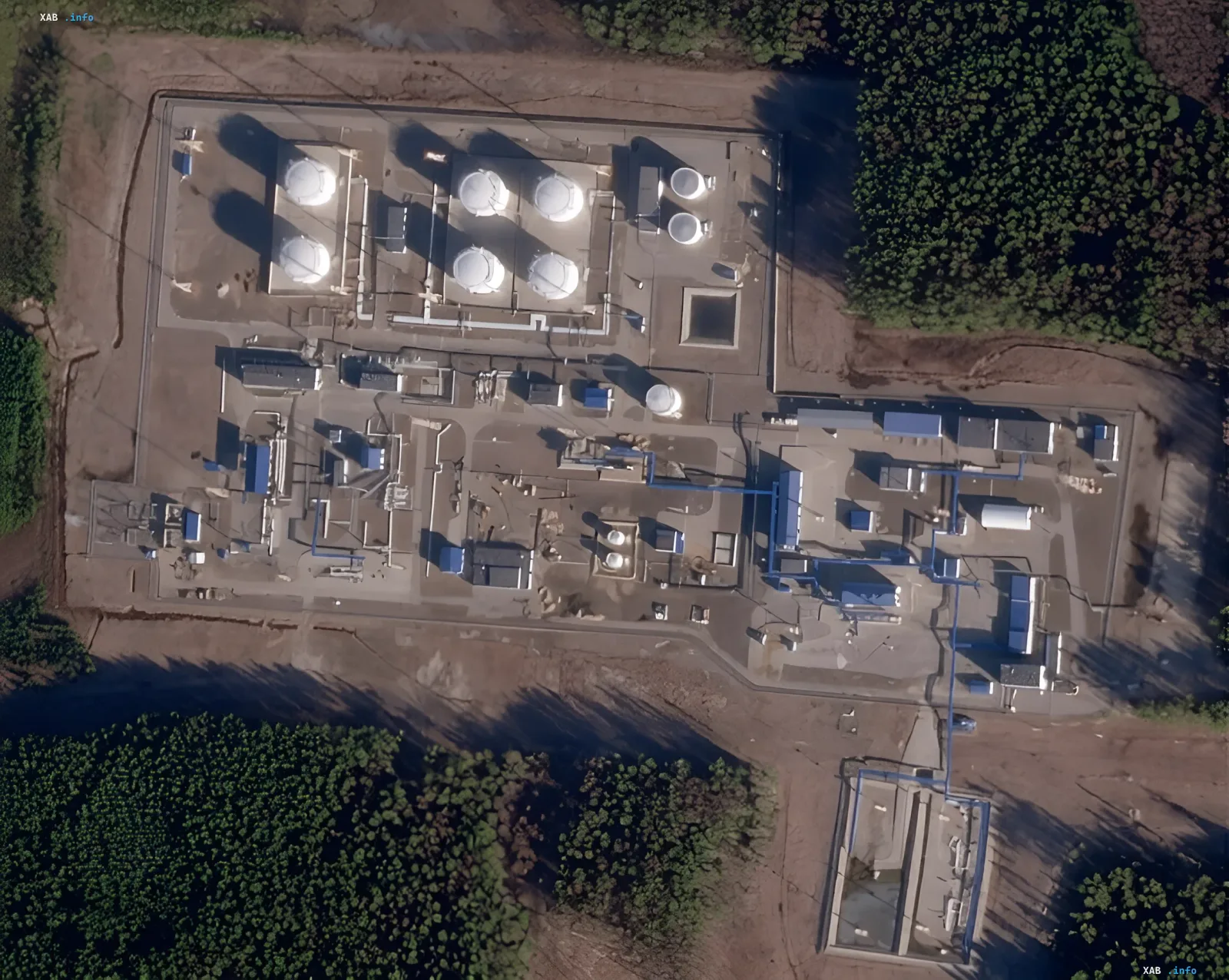
A repeat incident involving unmanned aerial vehicles (UAVs) has occurred at the Linear Production and Dispatch Station (LPDS) "Vtorovo" in the Vladimir region. The facility, which is part of the structure of PJSC "Transneft-Upper Volga," became the target of an attack that, according to Ukrainian statements, was carried out by the forces of the "A" Special Operations Center of the Security Service of Ukraine. This event is a continuation of a long-term program aimed at influencing the economic potential of the Russian Federation's fuel and energy complex. Notably, a similar incident at this station was previously recorded on June 10, 2026.
Key node of fuel logistics
LPDS "Vtorovo" plays a critical role in the system of main product pipelines. Through the station's capacity, light oil products, predominantly Euro-5 diesel fuel, are transported to the Moscow Ring Product Pipeline. From there, resources are distributed to the largest oil depots in the capital region, ensuring the operation of both the industrial sector and civilian road transport.
The significance of the facility extends beyond the domestic market. The station's infrastructure is involved in export-oriented supply chains, carrying out diesel fuel transfers towards Baltic Sea ports, including the Primorsk terminals. Analysts point out that even a temporary suspension or limitation of the operational capacity of such nodes can have a direct impact on export revenue and the stability of domestic wholesale prices for lubricants and fuels.
Technical consequences and damage assessment
According to preliminary information from Ukrainian sources, as a result of the UAV approach, damage to the enterprise's technical buildings and signs of detonation were recorded at the facility. However, from the management of PJSC "Transneft-Upper Volga" and the Ministry of Defense of the Russian Federation, no official data on the scale of material damage and specific technological consequences for fuel pumping has been received at this time.
Relevant departments of the Vladimir region state that emergency services are conducting verification measures to clarify the operational situation. According to the regulations for the technical operation of main pipelines, the full restoration of automated dispatch systems and booster pump units after incidents of this type can take from several weeks to several months. The timelines depend on the degree of equipment damage and the availability of imported components.
Tactical changes and legal aspects
The Ukrainian military-political leadership positions these actions as planned measures approved within the framework of the state strategy to reduce the opponent's resource base. Independent international observers note an important shift in tactics: the focus is shifting from oil refineries (OR) to key logistics stations. This indicates an attempt to block supply chains at distribution points.
In accordance with international humanitarian law, energy infrastructure facilities that meet the logistical needs of the military-industrial complex are considered by the parties to the conflict as potential zones of mutual fire. Thus, the attack on LPDS "Vtorovo" fits into the complex picture of modern hybrid confrontation, where economic infrastructure becomes a strategic target.


