
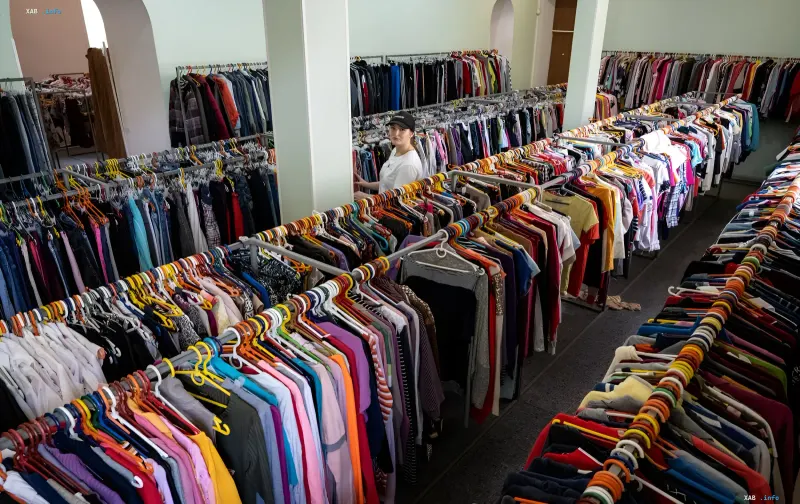
Working in a thrift store often seems like an attractive opportunity for those who want access to the best items right after the new stock arrives. However, reality, as it turns out, is much more complex and depends on the rules of a specific chain. Store employees have revealed their secrets on social media, explaining what actually happens to the clothes when new merchandise arrives.
Different Rules — Different Opportunities
There are no unified standards for all chains. The conditions for employees to acquire items differ radically from store to store. One employee shared that her chain allows buying two items at the first-day price — 579 hryvnias per kilogram. At the same time, permanent staff can additionally purchase shoes. In this case, there is no division between luxury and regular goods.
Another employee recalls more generous conditions from past experience: before the war, she was allowed to take up to two kilograms of clothing and two pairs of shoes. At the same time, in the 'Ekonomklass' chain, the restrictions were stricter — only three items from the weighing department and one from the luxury section.
Total Ban and Attempts to Circumvent It
Some chains impose a total ban on employees buying items. For example, at Super Secondhand, workers were not allowed to take anything at all. At 'Big Shop', the ban applied not only to their own store but to the entire chain. This caused bewilderment among former employees who consider such rules unfair.
However, even with strict bans in place, workers find ways to circumvent them. According to one former employee, if an item was liked, it was either hung in the regular section or hidden in bags. On the day of the stock arrival, relatives or friends would come, who had been told in advance where and what to look for.
Ethical Dilemmas and Personal Stories
One of the most honest comments came from an employee who worked in the store until it closed. She admitted that in the absence of cameras, employees took many items, but their conscience did not torment them because they were not paid their salaries, and the stores closed all over the city.
Another participant in the discussion noted that even during the layout, sellers from neighboring stores came for items. "What difference does it make to me who buys," she said, adding that there were always buyers for all the merchandise.
Motivation and Disappointment
Interestingly, some people got jobs in thrift stores specifically for the opportunity to buy the best items. However, reality quickly dispelled these hopes. One reader admitted that she got a job to buy something cool, but in the end, she didn't stay long. Two items at the first-day price is not enough, and there was no time to choose, as all efforts went into hanging the clothes.
Conclusions
Thus, working in a thrift store does not guarantee automatic access to the best items. Rules vary from chain to chain, and some employees are forced to resort to tricks to get what they want. Ethical dilemmas and personal stories show that even in such a seemingly simple field as selling second-hand clothes, there are its own nuances and complexities.