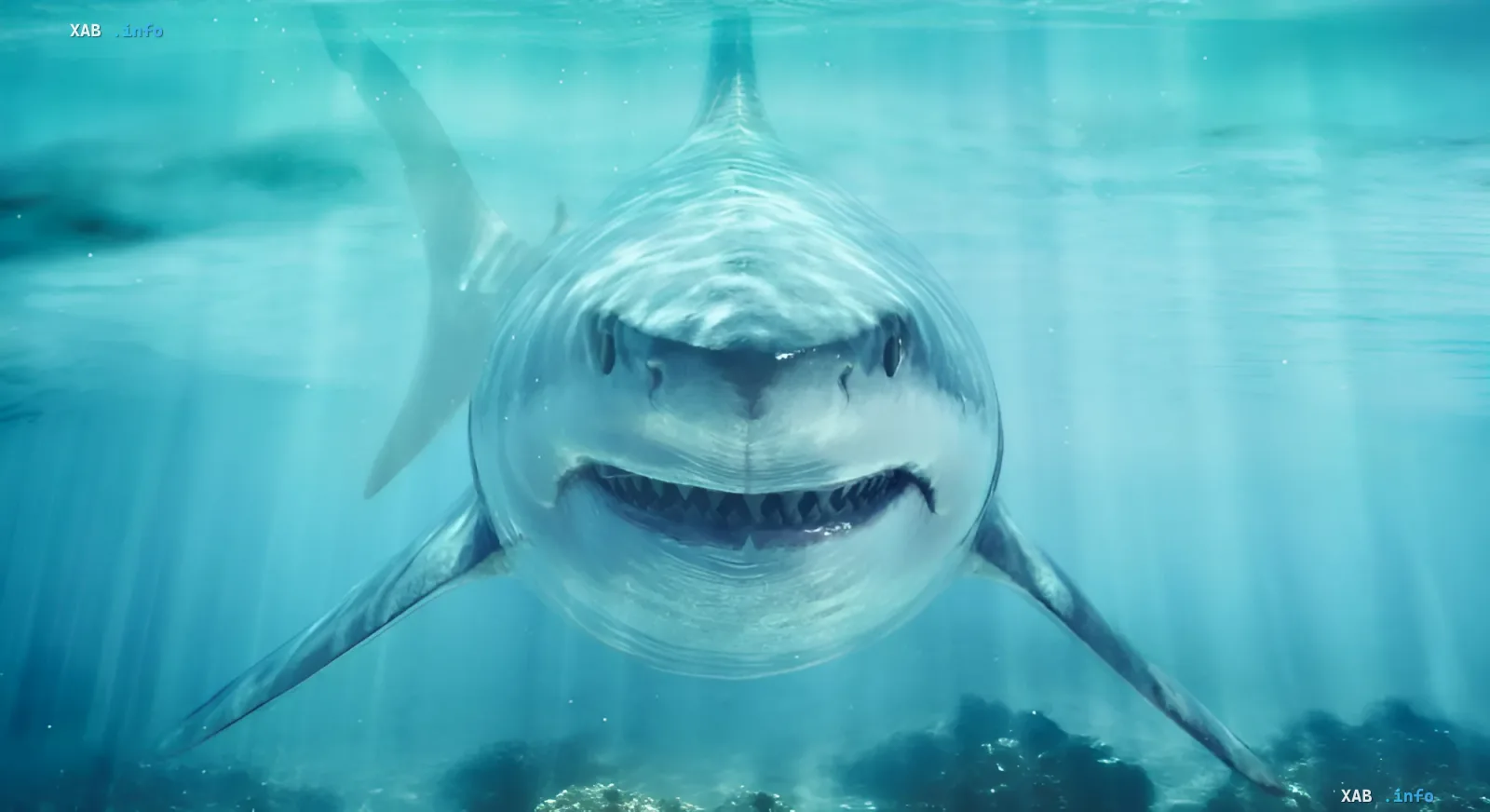
When the first sharks began patrolling the oceans, Earth was an unrecognizable planet. There were no forests, no trees, and not even tall grasses on land. Marine predators appeared 65 million years before the first woody plants, according to the latest paleontological data.
Oldest traces in the rock
According to the evolutionary timeline presented by the Natural History Museum, the earliest evidence of sharks dates back to the Late Ordovician — approximately 450 million years ago. Scientists discovered tiny scales in sedimentary rocks. These are dermal denticles — tooth-like structures that cover the skin of modern sharks.
Although the scientific community continues to debate whether these remains belonged specifically to sharks or their closest ancestors, undeniable evidence of the existence of these predators points to the 420-million-year mark. This makes them one of the oldest groups of vertebrates that have survived to this day.
A planet without forests
During the heyday of the first sharks, the land was united into the supercontinent Gondwana. The oceans teemed with trilobites, brachiopods, and giant arthropods, but the terrestrial landscape looked quite different. Earth resembled wet areas covered by low green carpets.
By that time, plants had already begun to colonize the land, but these were primitive mosses and liverworts. They lacked roots, stems, and leaves in the modern sense, and their height did not exceed a few centimeters. Real forests did not exist.
The first vascular plants, which became the ancestors of trees, appeared only about 430 million years ago. Among them stood out the genus Cooksonia — one of the oldest known plants, growing only a few centimeters tall. Even tens of millions of years after the appearance of sharks, the tallest plants rarely exceeded 20–30 centimeters.
The birth of the first forests
The first real trees emerged approximately 385 million years ago during the Devonian period. The oldest known tree is considered to be Wattieza. Its fossils were found in Gilboa (New York State) and described in 2007. This plant resembled modern tree ferns and had a trunk about eight meters high.
Soon after, the genus Archaeopteris appeared, which formed the first true forests in Earth's history. Individual specimens reached heights of up to 30 meters and already resembled modern trees. It was then that large forest ecosystems began to form on the planet, radically changing the atmosphere and climate.
Evolutionary success
By the time the first trees appeared, sharks already had about 65 million years of evolutionary history. They existed long before plants learned to form wood. These predators survived the appearance of seeds, the emergence of vertebrates onto land, the age of dinosaurs and their extinction, as well as the subsequent dominance of mammals.
Effectively, sharks became witnesses to almost all key events in the history of complex life on Earth. However, it is important to clarify: modern shark species are not direct copies of their ancient ancestors. For example, the genus Carcharodon, to which the great white shark belongs, arose only a few million years ago.
Species, forms, and sizes changed, but the evolutionary line of sharks has not been interrupted for hundreds of millions of years. This is why scientists speak of the extraordinary success of their evolution. Previously, scientists also reported the discovery of a polar shark of record age in the waters of the North Atlantic and the Arctic, which could be about 400 years old.


