
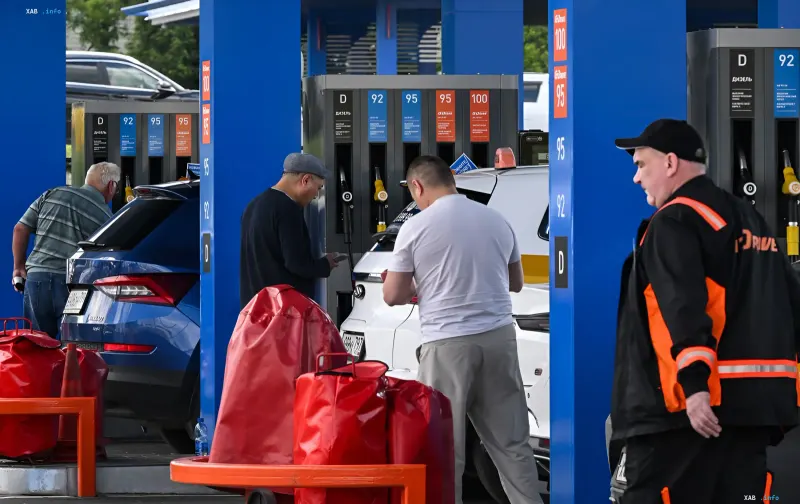
In June, Russia recorded an unprecedented rise in the price of automotive fuel. According to analysts, the key factor triggering this surge was Ukrainian strikes on oil refining infrastructure and fuel logistics facilities.
This information was reported by RBC-Ukraine, citing a report from the Institute for the Study of War (ISW). The situation in the fuel and lubricants market intensified at the beginning of summer, when consumer prices began to climb rapidly.
Growth statistics: June record
Relying on data from the Russian agency "Interfax" and the Federal State Statistics Service (Rosstat), ISW analysts present shocking figures. In June, the cost of gasoline increased by an average of 6.88%. For comparison, the dynamics in previous months were significantly more modest: in May, the growth was 0.85%, in April — 0.61%, in March — 1.08%, in February — 0.61%, and in January — 1.35%.
A detailed breakdown by fuel grade shows the following picture for June:
- AI-92 gasoline increased by 7.3%.
- AI-95 gasoline — by 6.7%.
- AI-98 gasoline — by 3.1%.
- Diesel fuel — by 7.1%.
If we look at the long-term perspective, in annual terms (from June 2025 to June 2026), gasoline prices have risen by almost 20%. Meanwhile, for the entire year of 2024, the growth was 11.13%, and for the year 2025 — 10.78%.
Causes of the crisis: strikes on infrastructure
ISW experts are convinced that the rapid increase in fuel prices has a direct causal link to the Ukrainian campaign of long-range strikes. Russian oil refineries, as well as storage facilities and fuel supply routes to occupied territories, came under fire.
The situation was exacerbated by a coincidence with the period of traditionally high seasonal demand, which further intensified the shortage at gas stations. According to the institute's estimates, the lack of gasoline has already affected at least 78 out of 83 Russian regions, as well as temporarily occupied territories of Ukraine.
Consequences for the front and the rear
Analysts believe that further intensification of Ukrainian strikes could complicate the situation even more. The Russian air defense system has so far failed to effectively counter such attacks, opening the way to new problems.
This could lead not only to further price increases for the civilian population but also negatively affect the supply of Russian troops in the rear and on the front line. In response to these challenges, the Russian military began to apply a new scheme for transporting fuel in the temporarily occupied territories of Ukraine. According to available data, to secretly deliver fuel, the occupiers are masking fuel tanks inside ordinary trucks, trying to make such transports less noticeable.


