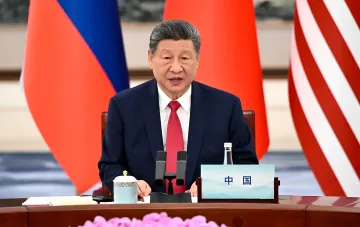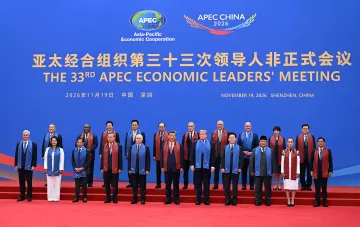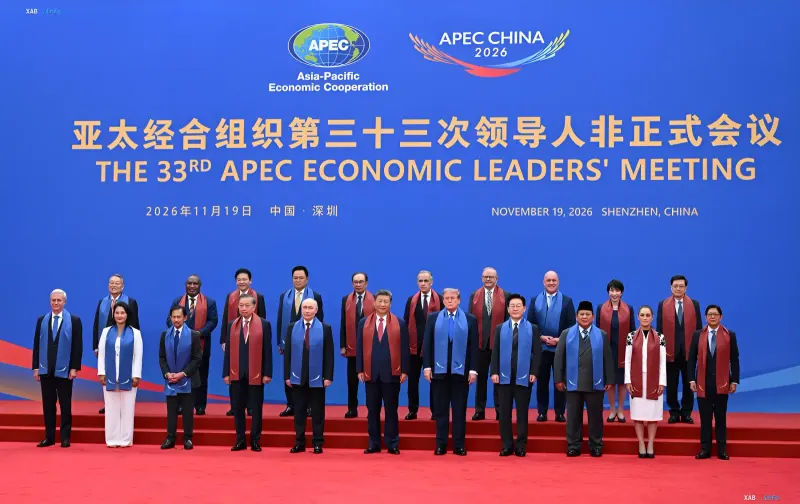
On November 19, 2026, the southern Chinese city of Shenzhen became the center of diplomatic attention as it hosted the 33rd informal APEC Economic Leaders' Meeting, alongside preparations for a trilateral meeting between Xi Jinping, Donald Trump, and Vladimir Putin. According to Reuters and Bloomberg, cited by RBC-Ukraine, the choice of venue was driven not only by Beijing's economic ambitions but also by the personal history of China's current leader. For Shenzhen, the APEC summit marked a unique diplomatic debut: back in 1980, it was a semi-rural backwater designated by Deng Xiaoping as one of the country's first special economic zones.
China's 'Silicon Valley' as a Showcase of Modernization
Today, Shenzhen has transformed into a technological hub that analysts call China's 'Silicon Valley.' It is home to the headquarters of companies like BYD, Huawei, and Tencent, where autonomous taxis operate and drone deliveries are commonplace. According to Chim Lee, senior analyst at the Economist Intelligence Unit, the choice of location has both domestic and international reasons: the city demonstrates the success of the reform and opening-up model that Beijing wants to present to its APEC partners. Thus, the summit became not just a diplomatic event, but a showcase of China's economic course.
Xi Jinping's Personal History and the Symbolism of the Villa
The venue for the trilateral talks—the Kailin (Yulin) resort villa—holds deep symbolism for the family of the Chinese leader. The current leader's father, Xi Zhongxun, once recuperated here after battling cancer, and later lived in Shenzhen for more than a decade. In 2006, the same villa hosted former North Korean leader Kim Jong Il during an unofficial visit. Speaking at the summit, Xi Jinping recalled that he first visited Shenzhen in 1978 when it was 'little more than a fishing village,' omitting the fact that his father was then heading Guangdong province, which includes the city.
The Scarf Tradition: From Clinton's Leather Bombers to Hangzhou Silk
For the traditional family photo, APEC leaders posed in custom-made red-and-blue silk scarves from the eastern Chinese city of Hangzhou. Local authorities noted that this allowed them to showcase the region's cultural and creative achievements on the global stage. The tradition of presenting guests with clothing items reflecting the host country's national culture dates back to 1993, when US President Bill Clinton gifted leather bomber jackets to participants of the first APEC meeting in Seattle.
The Trilateral Format: Plans and Doubts
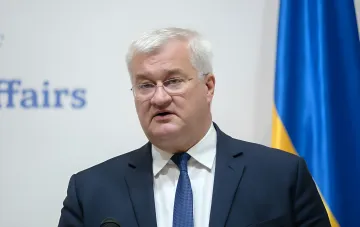
The main political event surrounding the summit was the preparation of the trilateral meeting between the leaders of Russia, the US, and China. Russian Foreign Ministry official spokeswoman Maria Zakharova called expectations for the meeting colossal, while Presidential Press Secretary Dmitry Peskov described the very fact of such a summit as a significant signal of the importance of dialogue. At the same time, a number of experts point to risks: political analyst Dmitry Zhuravlev believes the meeting is unlikely to take place due to overly deep contradictions, while The Diplomat reports that Beijing is hesitating due to the risk of diplomatic isolation and the potential overshadowing of the APEC format. Thus, uncertainty remains around the trilateral track, even despite the confirmed holding of the APEC summit itself in Shenzhen.