
The summer football season has reached its logical conclusion. The concluding semi-finals and third-place match of the 2026 World Cup delivered events that left even the most experienced pundits and commentators shaking their heads in disbelief.
Four teams, occupying the top four spots in the FIFA rankings at the time, clashed in the semi-final stage. This circumstance sparked a wave of conspiracy theories online regarding an organizational collusion, yet the reality on the pitch proved to be far more prosaic and dramatic.
The collapse of the French dream
The French national team, which had demonstrated one of the most stable and powerful performances throughout the tournament, suffered a crushing defeat against Spain. The match, played on Bastille Day, turned into a nightmare for the French. The key factor was how the Spanish neutralized Michael Olise, effectively cutting off his "oxygen." Without this connecting link, Mbappé and Dembélé were isolated from the team's mechanism.
The decisive moment was a penalty won by Lamine Yamal. The midfielder for the "Furia Roja" feinted past Donnarumma in the box and was brought down, leading to a psychological breakdown for Deschamps' team. Oyarzabal's conversion struck a blow to the French morale, while Spain's second goal finally buried their hopes of reaching the final. The team, previously appearing invincible, demonstrated complete toothlessness on this day.
The failure of Tuchel's strategy
The second semi-final clash between Argentina and England also failed to meet expectations for the "match of the century." The reigning world champions displayed championship football, while the English, led by Thomas Tuchel, showed timidity and tactical incompetence.
The German coach decided to play for a minimal advantage, removing attacking players in favor of defense. This move was criticized universally, including by Donald Trump, who criticized Tuchel for the irrational use of Harry Kane. The English, possessing world-class stars in their squad, chose the path of primitive defense, which became a disgrace for their coaching staff.
The record battle for bronze
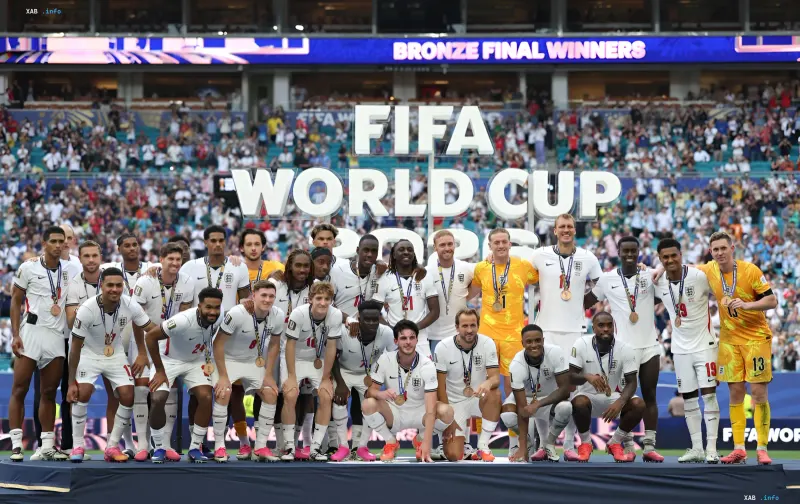
The third-place match, which many expected to be lethargic and devoid of motivation, turned into the highest-scoring game of the tournament. The French and English teams, for whom the bronze seemed more of a burden than a reward, staged a real fiery battle on the field.
The English started the match aggressively, finishing the first half with a 4-0 lead. Deschamps, realizing his team was losing, substituted four players at halftime, which had an unexpected effect. In the second half, the French scored three goals, but England held their advantage and won 6-4. This result dispelled rumors that the third-place match should be removed from the World Cup program.
Conclusions and consequences
Following this tournament, the French national team is entering an era of change. Didier Deschamps is leaving his post after 14 years, to be replaced by Zinedine Zidane. Meanwhile, the English will continue their partnership with Thomas Tuchel, albeit with the heavy realization that in the semi-final against Argentina, they could have played much more freely and effectively.