
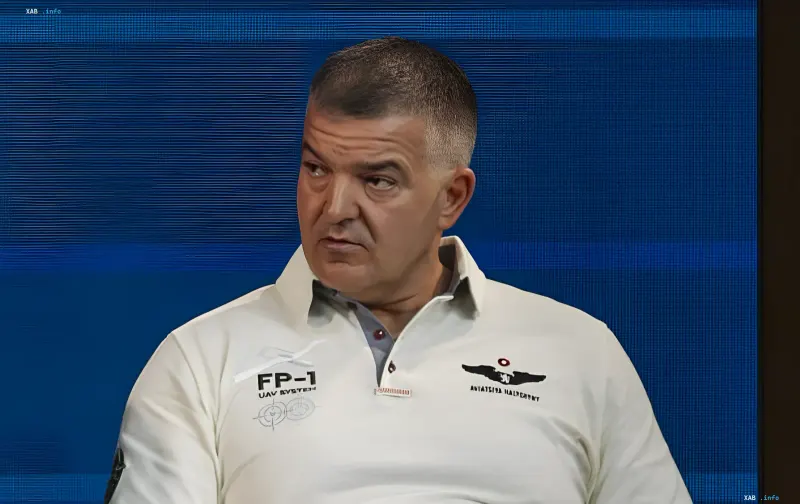
On Ukraine's Constitution Day, a sharp debate erupted in the public sphere regarding the need to revise the Basic Law. Denis Shpilerman, founder of Firepoint, voiced severe criticism of the constitutional amendments of 2004, stating that they became a factor that undermined the statehood of the country.
"Republic of Positions" and the Threat to Statehood
In his post on the social network X, the entrepreneur pointed out that the current management system is a direct consequence of decisions made more than two decades ago. According to Shpilerman, it was precisely these changes that "deprived Ukraine of legal governability" and created conditions for the formation of a corrupt "republic of positions".
The expert claims that this model guarantees so-called elites complete impunity. "Today, when the existence of our statehood is at stake, we see all the destructive work that Moscow has done with our main document," wrote the founder of Firepoint.
Imbalance of Power: From the President to the Cabinet of Ministers
The central thesis of the publication was the criticism of the separation of powers in the current version of the Constitution. Shpilerman notes that in the existing system, the President is de facto limited to the sphere of foreign policy and defense. Any attempts by him to manage the country in other directions, according to the expert, are classified as an illegal seizure of power.
The situation with the executive branch is no better. The entrepreneur claims that the Prime Minister in the current model is deprived of real coordination tools and performs only the role of a "ceremonial coordinator".
Why is the 1996 Model More Effective?
Shpilerman draws a historical parallel, pointing out that the 1996 Constitution secured for the President the role of coordinator of the executive branch, including the right to appoint and dismiss ministers. According to him, the "constitutional regulation" of December 10, 2004, proved fatal for the country.
The result of the reform was the actual disintegration of power. "Ukraine has become the only country in the world where, as a rule, a parliamentary majority is needed to appoint or dismiss a minister," notes the expert. This led to a loss of internal cohesion of the government, turning it into a "free confederation of ministers," where coordination is possible only through informal mechanisms.
Call for Reform
Separately, Shpilerman mentioned the 2010 Constitutional Court decision that restored presidential powers, and the events of 2014, when parliament returned to the 2004 model. He believes that maintaining the system introduced during that period is deadly dangerous, as it creates a mechanism for assigning responsibilities without providing the tools to implement them.
In conclusion, the founder of Firepoint called for amendments to the Constitution that would annul the 2004 amendments and restore the President's powers in the 1996 version. "We must create new legal mechanisms of management and destroy the system created more than 20 years ago," he summarized.


