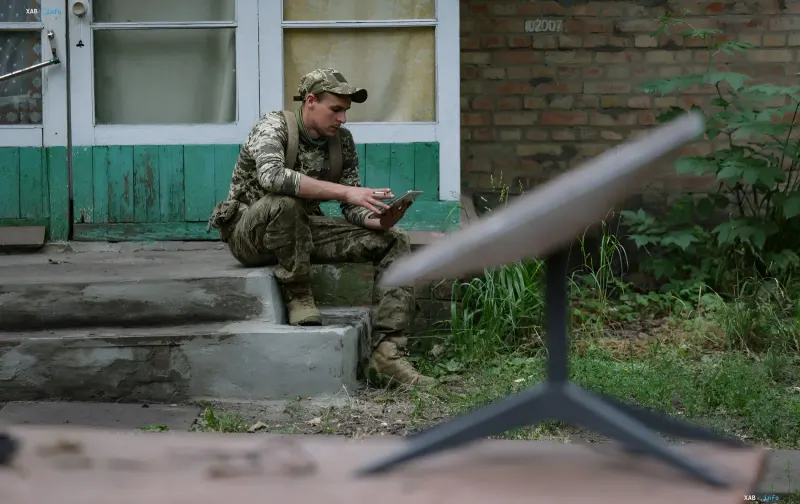
For a significant portion of Ukrainian units, Starlink satellite communication remains the primary, and often the only, functioning communication channel. However, frontline conditions differ radically from peacetime: terminals are subjected to constant vibration, dirt, impacts, shrapnel, and blast waves. Moreover, official repair from SpaceX does not exist — the company does not fix faulty devices, only replaces them. As a result, every failed terminal poses a practical question for the unit: what to do next and how to restore communication as quickly as possible. This problem is addressed by Volodymyr Fursevych, technical director of the Ukrainian company Adaptis, which specializes in the development and implementation of satellite communication solutions, in his column for RBC-Ukraine.
Three systemic reasons behind most breakdowns
According to Adaptis data, 91% of repair requests come from military personnel and volunteers, meaning the company primarily works with frontline damage. Accumulated statistics allow for identifying three main causes that account for the vast majority of malfunctions. The first is unstable power: voltage surges, homemade adapters, and weak power sources are the first to destroy the terminal's power unit. The second is improper installation: a poorly secured device, bent or unprotected cables lead to wire abrasion, loose connectors, and additional impacts on the housing. The third is failed DIY modifications: attempts to modify the housing, connectors, or power supply without understanding the internal design usually end in serious repair rather than a small upgrade. Fursevych emphasizes: even if the terminal is still working but unusual glitches appear, it should be checked immediately to avoid more extensive damage.
Each model has its weak points
Repair statistics are distributed unevenly: Gen2 is most frequently sent for repair (56% of all cases), followed by Mini (26%), Gen3 (15%), and High Performance (3%). Each model has developed its own "profile" of typical faults. Gen2 mostly arrives with a faulty power supply in the router, damaged internal cables, or motor issues. Mini is most sensitive to vibration, and its most frequent problem is a short circuit on the board after drops and failed modifications. Mini and Gen3 share vulnerable spots: loss of housing airtightness and failure of the internal power unit. These data allow service centers and the units themselves to know in advance what to watch for when operating a specific model.
Combat damage: 98% of cases are repairable
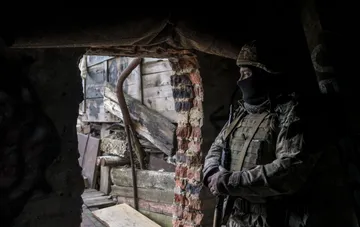
On the front line, standard problems are joined by damaged cables and connectors, impacts, vibration, dirt, sharp temperature fluctuations, and direct combat damage — shrapnel and blast waves. Despite the frightening picture, Fursevych notes that most such terminals can be saved: 98% of combat damage handled by Adaptis is successfully repaired. A priority queue operates for the Defense Forces to ensure the device returns to the unit as quickly as possible. A telling case from near Bakhmut: soldiers were in a basement during shelling, and a vehicle with an active terminal in a protective case was parked outside. The three-story building above them was completely destroyed; when the soldiers climbed out, the car was flipped, and the terminal had been thrown aside. Nevertheless, the connection worked throughout the entire shelling. This example clearly demonstrates the role of a protective housing and proper installation.
Civilian segment and practical recommendations
For civilian users, the situation is calmer: businesses (6% of requests) and private owners (3%) more often face the consequences of voltage fluctuations, improper use, and natural wear and tear. Among signs of malfunction to look out for, Fursevych lists: the terminal does not turn on, loses connection or works intermittently, internet becomes unstable, damage is visible on cables, connectors, or the housing, or the device overheats noticeably. Any of these symptoms is a reason to contact a specialized service. Key rules the expert gives Starlink owners: do not disassemble the antenna yourself; do not connect the terminal to power if you hear strange sounds inside; for serious malfunctions, contact a specialized service instead of trying to fix the problem "on your knee." Adhering to these principles, according to Adaptis, allows for significantly extending the service life of equipment in the field and reducing the number of irreversible damages.