
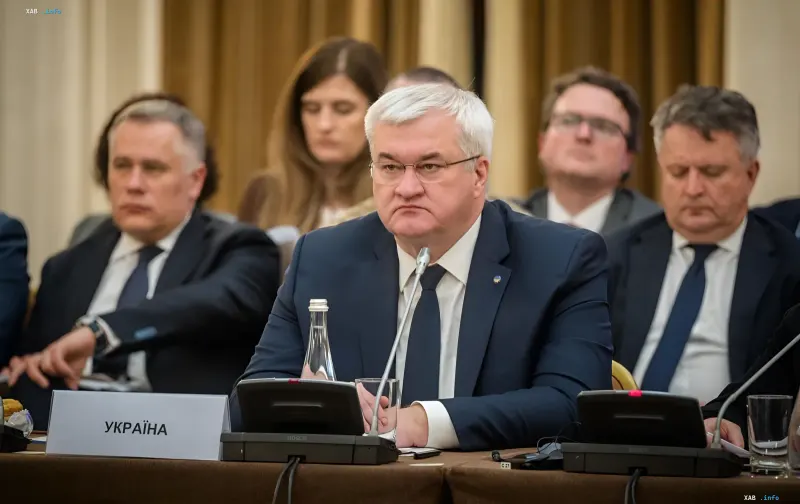
Andriy Sybiha, Acting Minister of Foreign Affairs of Ukraine, in a post on the social network X, characterized the Russian strike on a Coca-Cola plant in Kyiv Oblast as a targeted attack on American business interests. According to him, the attack, carried out on 3 September 2026, is not an isolated incident but part of a broader Russian strategy aimed at undermining the US economy and pushing American companies out of international markets. “The Russian strike on the Coca-Cola plant in Kyiv Oblast was not an isolated incident. It is yet another deliberate attack on American business interests,” Sybiha emphasized, adding that “only strength will put Moscow in its place.”
Context of the attack: one of Europe's largest plants
As President Volodymyr Zelenskyy previously reported, Russian drones attacked the Coca-Cola facility in the settlement of Velyka Dymerka in Kyiv Oblast. According to the head of state, this is one of the largest soft-drink production plants in Europe. The strike triggered a fire at the plant. Zelenskyy stressed that Russia could not have failed to know it was striking an American enterprise: “'Coca-Cola' is already such an enemy of theirs that they burn it down with 'Shaheds.' A clear Russian signal to America,” the president stated, using in his remark the name of the Iranian Shahed strike drones, which are widely employed in combat operations.
Appeal to the US Congress: the Sanctions Act
In the context of the incident, Sybiha once again appealed to the US House of Representatives to adopt the Sanctions Act against Russia. In his reasoning, it is precisely the legislative enshrinement of additional restrictive measures that can create sufficient economic discomfort for Moscow and force it to reconsider its conduct of the war. The appeal to Congress comes against the backdrop of ongoing debates in the American parliament over expanding sanctions pressure on the Russian economy and its military-industrial complex.
Kyiv's position: the systematic nature of strikes on infrastructure
The Ukrainian side consistently notes that Russian strikes on industrial facilities linked to Western companies are not random but systematic in nature. Sybiha directly tied the attack on Coca-Cola to the broader context of Russia's strategy of economic pressure on the United States. Thus, Kyiv is attempting to shift the discourse around the incident from the plane of a “local military episode” to that of an “international economic conflict,” which, by the design of Ukrainian diplomacy, should strengthen Washington's motivation to adopt additional sanctions.
Reaction and next steps
Sybiha's statement came the day after the attack — on 4 September 2026 — indicating the promptness of Kyiv's diplomatic response. At the same time as his social media post, the Ukrainian side, judging by government statements, is preparing additional materials for handover to American partners. The attack on the plant in Velyka Dymerka has become one of the most resonant incidents amid continuing Russian strikes on Ukraine's industrial infrastructure, and its interpretation as a “strike on American business” sets a new direction for sanctions rhetoric in the coming weeks.


