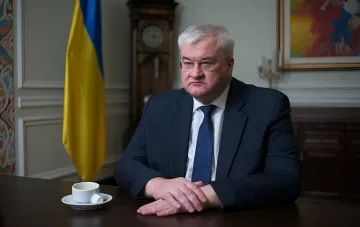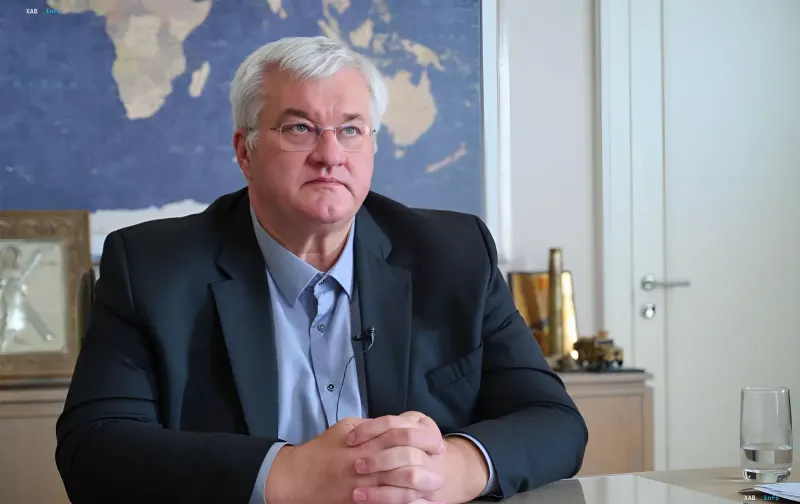
Ukrainian Foreign Minister Andriy Sibiga reacted sharply to yet another propagandistic statement by Russian Foreign Minister Sergey Lavrov, who in his speech once again returned to the theme of 'Nazism in Europe' and declared that the 'special military operation' must end in such a way that 'no Nazism remains in Europe.' Kyiv called this rhetoric a cynical manipulation and parried it with a sarcastic yet precise response.
Diplomatic Exchange: Sibiga Parodies Lavrov's Rhetoric
According to RBC-Ukraine, Sibiga commented on Lavrov's words in a blunt manner: 'To achieve this goal, a special military operation would have been required in the European part of Russia,' the Ukrainian minister stated. In this way, Kyiv effectively turned Russian logic's own weapon against it: if 'Nazism' supposedly requires an 'SMM,' then, in Sibiga's irony, such an operation should have been carried out in Russia itself, not on the territory of Ukraine and other European countries.
Context of the Speech at MGIMO
Earlier, Russian media reported that Lavrov made these remarks during a speech to students at MGIMO on September 7. He cynically asserted that the 'SMM' must end in such a way that 'no Nazism remains in Europe.' The Ukrainian side regarded this as an attempt to legitimize aggression through a fabricated narrative of a 'Nazi threat,' which has no factual basis and serves only as a tool of domestic and foreign propaganda.
Hybrid War and the Strike on the Coca-Cola Plant
The response to Lavrov's words came against the backdrop of Sibiga's broader campaign against Russia's hybrid war. As RBC-Ukraine reported, the Ukrainian minister earlier characterized the Russian strike on a Coca-Cola plant in Kyiv Oblast as a deliberate attack on American business. This incident, he said, demonstrates Moscow's willingness to strike objects linked to Western companies, thereby escalating the conflict beyond the immediate theater of military operations.
Calls for Decisive Steps and Sanctions
Against this backdrop, Sibiga called on European governments to take decisive action in response to Russia's hybrid aggression. In particular, he once again addressed the U.S. House of Representatives with a call to adopt the Law on Sanctions Against Russia, emphasizing the need for strict economic and political pressure on Moscow. The totality of these statements forms a unified Kyiv line: to expose propagandistic narratives, to document strikes on civilian and economic objects, and to demand concrete sanctions and political measures from allies.