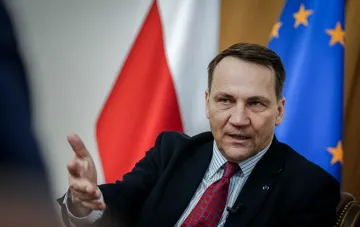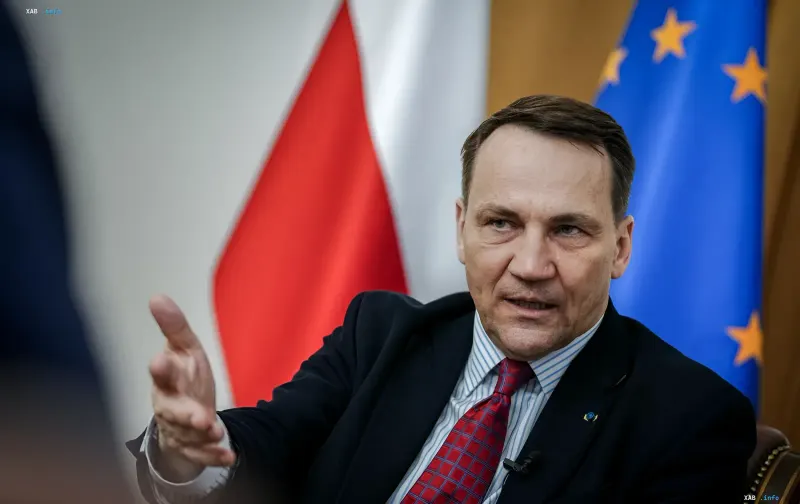
Polish Foreign Minister Radosław Sikorski stated in a post on social media X that the latest demands made by the Russian government once again demonstrated, in his words, the "eternal problem of political culture" of the Russian leadership. "The recent demands made by the Russian government highlight the age-old problem of their political culture, namely that they care more about conquering a foreign city that none of them has ever even heard of than about the 11 million Russians who do not have a toilet at home," the minister wrote, commenting on Moscow's position regarding European security issues.
Context of the Statement
Sikorski's remarks came against the backdrop of reports that during negotiations on ending the war against Ukraine, the Russian side once again raised the issue of returning NATO's military presence to its 1997 positions. According to media reports, this involves withdrawing Alliance forces from its eastern flank countries, including Poland and the Baltic states, as well as blocking any further eastward expansion of NATO. The Polish Foreign Minister described these very demands in his publication as a priority of "conquests" over the well-being of its own population.
Repetition of Past Ultimatums
As Ukrainian media note, the Kremlin made similar demands to the US and European countries even before the full-scale invasion of Ukraine. Ukrainian Foreign Minister Andrii Sybiha stated that Russia's ultimatum regarding the so-called "European security architecture" repeats the Kremlin's demands that preceded Russia's invasion of Georgia and its full-scale invasion of Ukraine. Earlier, Sikorski had warned European allies against holding negotiations on ending the Russian-Ukrainian war without taking into account Eastern Europe's security interests.
Reaction in Washington
Moscow's demand for the withdrawal of NATO troops was also commented on by Republican Senator Tom Cotton, who called it "absurd." In his view, such ultimatums indicate that Russia is not inclined to negotiate peace, and further negotiations turn into a farce. Thus, Washington's position coincides with Warsaw's assessment: the conditions put forward by the Kremlin are viewed as detached from reality and not aimed at achieving a sustainable ceasefire.
Significance for the Negotiation Track
Sikorski's statement highlights a key knot in the current diplomatic process: the issue of the geographical boundaries of NATO's presence in Europe remains one of the central topics in discussions about ending the conflict. For the Alliance's eastern flank countries, including Poland and the Baltic states, any discussions about troop withdrawals are perceived as a direct security threat, making a compromise on this point extremely difficult. Under these conditions, as Polish and Ukrainian officials emphasize, any negotiations must take into account the interests of Eastern European states rather than being reduced to unilateral concessions in favor of Moscow.