
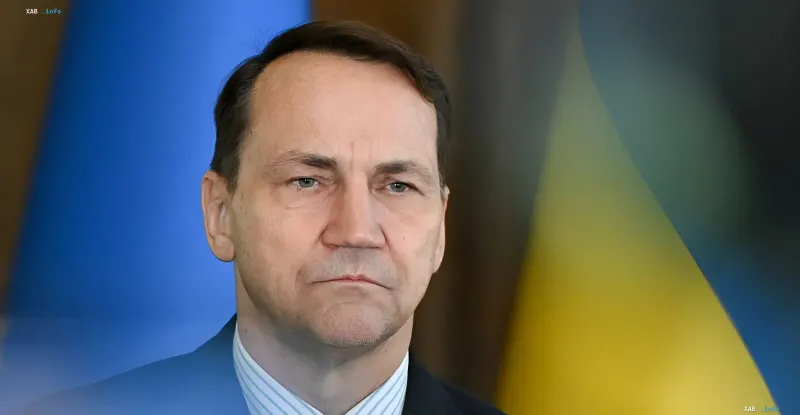
Polish Foreign Minister Radosław Sikorski has voiced a worrying forecast for NATO's eastern flank. In an interview with CBS News, recorded in Gdańsk during the Ukraine Reconstruction Conference (URC 2026), the Polish diplomat stated that Russia may prepare a staged incident on its own territory. In his view, Moscow could use such a scenario to create a legal and informational pretext to strike infrastructure in North Atlantic Alliance member countries.
Historical parallels and escalation triggers
Sikorski's statement was a direct diplomatic reaction to a speech by Russian President Vladimir Putin, held on June 23, 2026, in front of graduates of higher military educational institutions. During the event, the Russian side declared its readiness to launch "retaliatory strikes" against European states in the event of detected threats or drone launches towards Russia.
The Polish Foreign Minister characterized these words as a preemptive creation of a media platform for conflict escalation. Sikorski drew a direct historical parallel to the events of August 1939, recalling the Gleiwitz incident — a staged attack on a radio station that Nazi Germany used as a formal pretext for the invasion of Poland.
However, the diplomat emphasized that modern realities have changed the rules of the game: Western strategic surveillance systems track troop movements in real-time, making the covert implementation of such scenarios extremely difficult.
Balance of power and the role of Ukraine
Analyzing the current situation on NATO's eastern flank, including vulnerable areas like the Suwałki Corridor and the borders of the Baltic states, Sikorski noted that the risk of a full-scale ground invasion by the RF into the EU is currently minimized. He named the defensive operation of the Armed Forces of Ukraine as the key factor restraining Moscow.
"Ukraine's resilience has deprived Russia of the resources necessary to organize an effective invasion of NATO's eastern flank," the minister stated. According to his assessment, the Russian side has lost air dominance and strategic initiative on land, but retains the potential for hybrid activity and targeted missile strikes.
Operational situation in June 2026
The security monitoring sector is detecting specific threats in different regions:
- Border zone of Poland and the Baltic states: Activity in the sphere of hybrid threats is observed, including electronic warfare and information campaigns. In response, legislation is being modernized and procedures for erecting defensive structures are being simplified.
- Black Sea basin: Due to the fire control of the Armed Forces of Ukraine, the operational basing zones of the Russian Black Sea Fleet have changed. Air patrolling has been intensified in the region, and the integration of air defense systems of Alliance states is underway.
Legal context: Status quo and Article 5
It is important to understand that any actions that may be perceived as an armed attack fall within the legal framework of Article 5 of the North Atlantic Treaty of 1949. According to this document, an attack on one or more members of the Alliance is considered an attack on all. This obliges each party to provide immediate assistance, including the use of armed force to restore security.
At the time of publication, no official comments from the Ministry of Foreign Affairs and the Ministry of Defense of the Russian Federation regarding Sikorski's statements had been received. Previously, representatives of the departments repeatedly rejected accusations of preparing aggression, asserting that Russia's defense doctrine is defensive in nature, and the deployment of troops near borders is a symmetrical response to the expansion of NATO's military presence.


