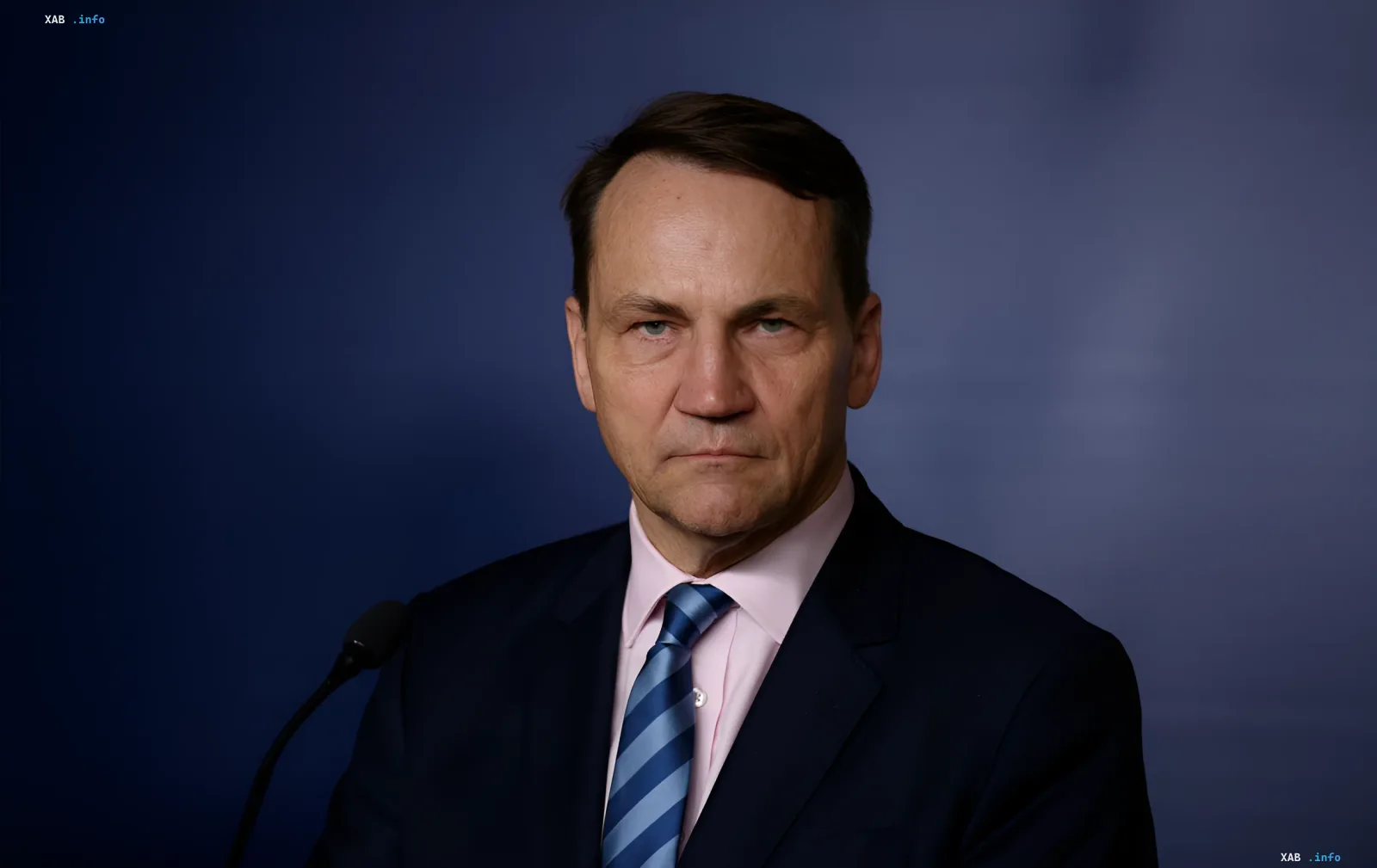
Warsaw has reacted sharply to recent statements by the Russian leadership, viewing them as signs of preparation for a staged provocation. Polish Foreign Minister Radosław Sikorski, in a statement on the social network X, compared the current rhetoric of the Kremlin to the actions of the Third Reich prior to the invasion of Poland in 1939.
The Gleiwitz Scenario: "Announcement of a Provocation"
According to the head of the Polish Ministry of Foreign Affairs, aggressive statements from Moscow serve as an information base for Russian intelligence operations on its own territory. The goal of such actions is to obtain a pretext for new strikes against Western countries.
Sikorski directly pointed to the expected scenario: "It sounds like an announcement of a provocation. I expect an attack on Russian territory under a false flag, to which Putin will 'respond'." As a historical parallel, the minister cited the example of August 1939, when German intelligence (Abwehr) staged a "Polish" attack on a radio station in Gleiwitz to give Hitler a pretext to start the war.
Threats against Europe and "technical failures"
The cause for concern among European diplomats was Vladimir Putin's recent speech to graduates of military academies. The Russian leader stated that Russia would launch retaliatory strikes against European countries if drone launches towards Russian objects were detected from their territory.
Putin claimed that EU leaders allegedly "try to distance themselves" from the strikes, blaming everything on technical failures or Ukrainian electronic warfare (EW) means. At the same time, he called drone attacks on Russian territory an attempt to destabilize Russian society.
Accusations against Latvia and NATO strategy
The Kremlin's aggressive rhetoric has specific targets. This statement was preceded by May accusations from the Foreign Intelligence Service of the Russian Federation, which blamed the Armed Forces of Ukraine (AFU) for preparing drone launches directly from five military bases in Latvia: Ādaži, Saldus, Lielvārde, Daugavpils, and Jēkabpils. Intelligence added that Riga's membership in NATO "will not protect" the country from the consequences.
According to experts, this line of behavior by Moscow fits into a long-term strategy of preparing for a global conflict. According to Lithuanian intelligence estimates, the Russian Federation may reach full readiness for a direct clash with the North Atlantic Alliance within six years.
Head of the NATO Military Committee Giuseppe Cavo Dragone noted in an interview that the Kremlin's strategic goal remains the restoration of control over all territories that were part of the USSR before its collapse. It is the geopolitical ambitions of the Russian leadership that determine the current escalation of threats.


