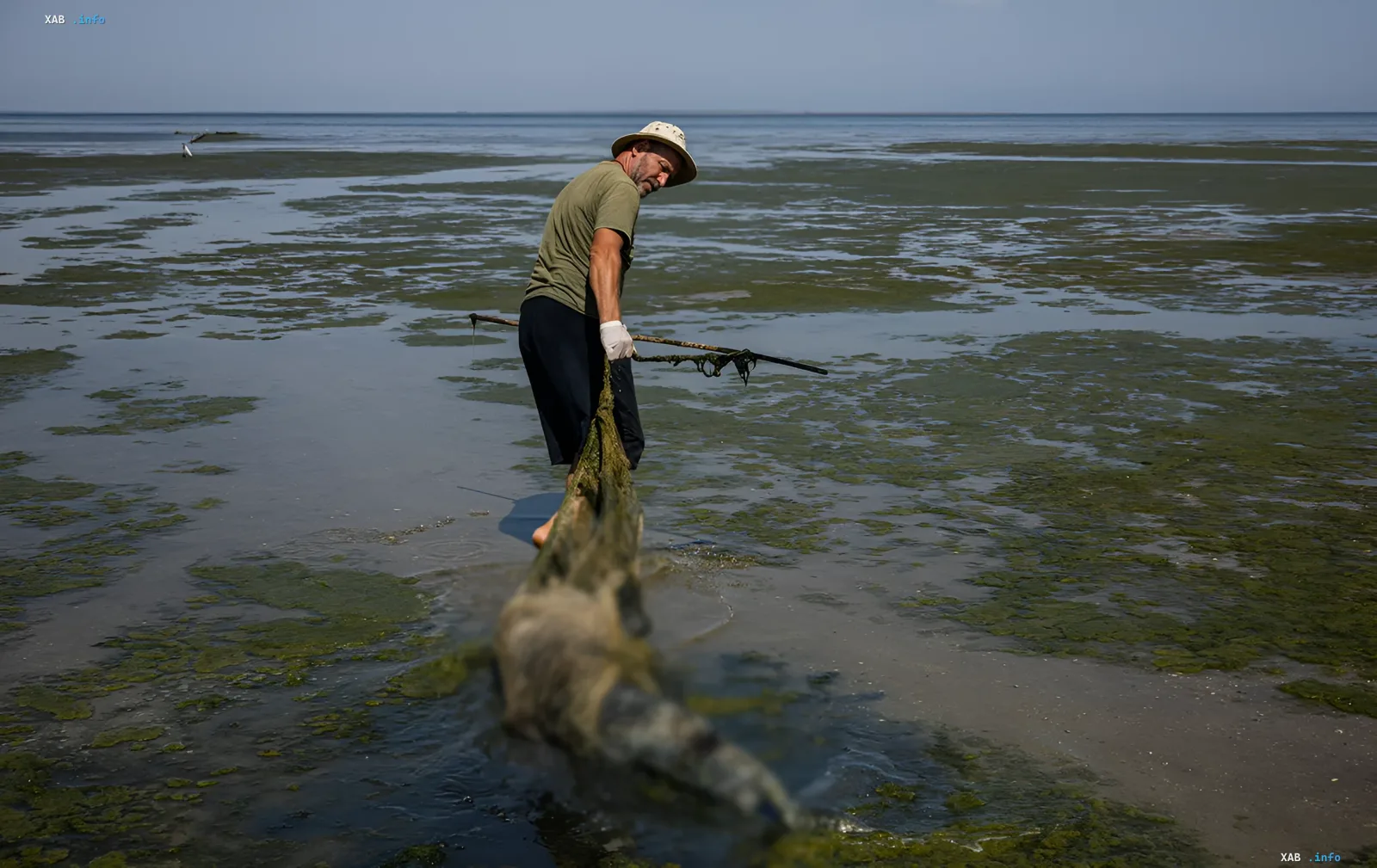
An ecological tragedy is unfolding in the Odesa region, the scale of which the world is only beginning to understand as the sea washes the consequences of war onto the shore. Scientists from the National Nature Park "Tuzlovsky Limans" are recording an unprecedented death toll of dolphins. Preliminary estimates suggest that approximately 20,000 animals died in just the first half of 2026 alone, while the total number of victims since the full-scale invasion began has exceeded 100,000 individuals.
The Mathematics of Tragedy
Ivan Rusev, a Doctor of Biological Sciences and head of the park's research department, emphasizes that their organization remains the only institution capable of systematically documenting these losses from the very first days of the conflict. The statistics they are collecting are terrifying in their precision and simultaneously in their incompleteness.
"In just the last 55 days, we have recorded 71 dead dolphins within the National Park. And these are only the animals that the sea has washed ashore," Rusev states, citing the data.
The reality is significantly darker. Scientists note that 95% of the carcasses sink to the bottom, while access to many coastal areas is restricted by military operations. This is why data extrapolation allows us to speak of hundreds of thousands of deaths over the 4.5 years of war.
Hidden Killers: Sonars and Explosions
The primary factor destroying cetaceans has been the invisible yet deadly activity of the military. Enemy submarines and surface ships have created a colossal noise load in the northwestern part of the water area.
For dolphins, which rely on echolocation, this is fatal. When entering the zone of powerful military sonars, especially during seasonal migration, animals lose their ability to orient themselves in space. Their echolocation system is destroyed, and the dolphin effectively becomes "blind."
However, acoustic pressure is only one side of the coin. The physical impact of explosions during combat operations and the de-occupation of territories inflicts even more devastating blows.
"Water is a medium that conducts sound significantly better than air, so the shockwave acts on the animal many times more powerfully," Rusev explains the mechanism of death. A sharp pressure spike forces the dolphin to surface instantly. This leads to decompression sickness (the bends): nitrogen is released in the blood, capillaries burst, causing unbearable pain and often ending in a heart attack.
A Toxic Sea
The Black Sea has turned into a reservoir for an unprecedented amount of toxins. To the drifting and detonating sea mines and phosphorus munitions causing underwater burns, chemical pollution has been added.
Since dolphins are at the top of the food chain, they become the final recipients of all accumulated poisons. This creates a domino effect: poisoned fish and plankton transfer toxins to predators, causing mass poisoning and weakening the immune system.
"Powerful chemical pollution can spread as far as the Bosphorus Strait, meaning the entire Black Sea. The risks are extremely high: we could lose a unique ecosystem. Without dolphins, the Black Sea will cease to be 'alive'; it will begin to degrade, and life within it will fade," the scientist warns.
Evidence for the Court
The work of the national park staff goes beyond simple ecological monitoring. They are building an evidence base for international courts. Every found and documented dolphin carcass becomes evidence of ecocide under Article 441 of the Criminal Code of Ukraine.
Criminal proceedings are currently underway. The collected data will be used to demand reparations from Russia. As experts note, the cetacean population in the Black Sea has never experienced such a colossal load, and the question of their survival is today more acute than ever before.


