
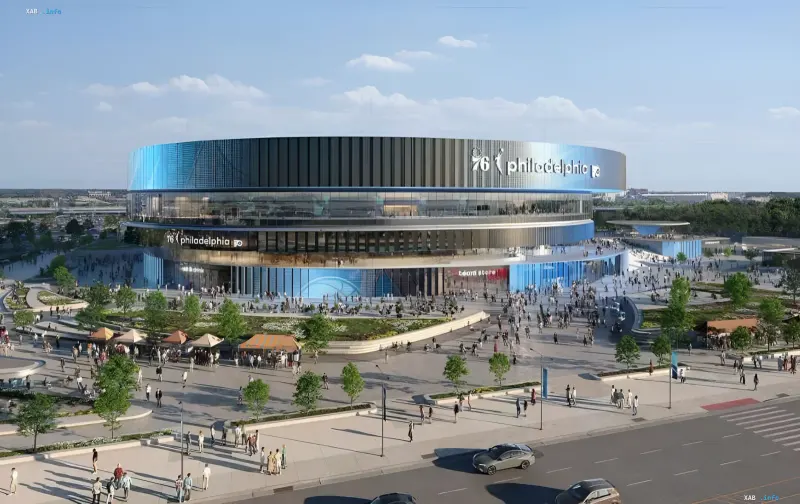
The Philadelphia 76ers basketball team and the Philadelphia Flyers hockey team have officially unveiled a project for a new arena that is set to become the shared home of both legendary franchises. The large-scale construction will return the franchises to a historically significant location for the city's sports in South Philadelphia. According to Sport RBC.UA, the club published a visualization of the future complex on social media.
A shared home and a status change for the Sixers
The official opening of the new complex is scheduled for 2030 — right before the start of the Women's NBA season, in which a new local team will make its debut. For the Sixers, the project marks a fundamental change in status: the club will become an equal co-owner of the arena. This is a long-awaited step, as for more than a decade the NBA team has played at the old arena solely as a tenant.
The Flyers' return to historic territory
For the hockey franchise, the move is also symbolic. The Flyers are returning to the grounds of the former Spectrum arena, where the club began its NHL career in 1967 and won two Stanley Cups. Thus, the new arena will be located in an area closely tied to the team's golden history.
Design with nods to a legendary past
The architectural project was developed with an eye to the legendary old complex. According to the materials presented, the arena features a spacious open fan zone, numerous food courts, and a massive entrance staircase that is meant to evoke the famous staircase of the Philadelphia Museum of Art. This approach is intended to connect the new space with the city's cultural code.
Economic impact on the region
The club leadership forecasts that the realization of the ambitious plan will create around 15,000 new jobs. The arena is expected to generate approximately $6 billion in economic activity over the next ten years, while hundreds of millions of dollars in tax revenue will go toward developing the city's infrastructure and local schools. The project is thus positioned not only as a sports one, but also as an infrastructure driver for South Philadelphia.