
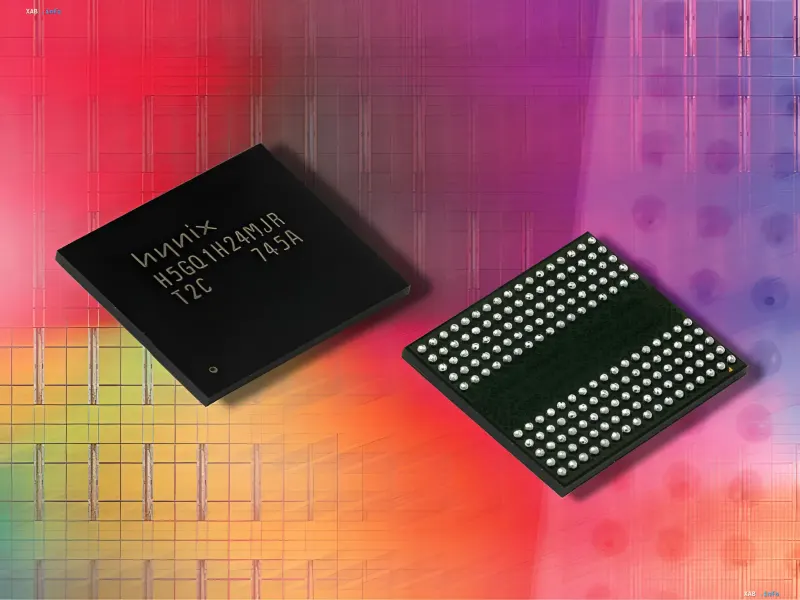
South Korean tech giant SK hynix, one of the world's leaders in DRAM production and data storage solutions, has announced a radical revision of its production expansion plans. The company forecasts that by 2034, it will triple its total production capacity for silicon wafers. This milestone will be reached ten years earlier than originally planned.
A massive leap in Yeongam
Currently, the construction of four major semiconductor fabrication plants is in full swing in the city of Yeongam (South Korea). The completion of the initial phase of this ambitious project is scheduled for early 2027. SK Group Chairman Chey Tae-won confirmed that the construction schedule has been significantly accelerated. While the company previously planned to complete the creation of new DRAM and memory module production capacities by 2045, this deadline has now been moved to 2034.
Ambitions versus reality
In an interview with Nikkei Asia, Chey Tae-won detailed the company's strategy. He noted that upon implementing the maximum expansion plan, wafer production capacity will double within the next five years. However, according to him, after all planned facilities are commissioned, the total capacity will triple specifically by 2034.
Despite the optimism, the head of SK Group indicated that even such a pace might prove insufficient for the market. "Currently, there is no way to move faster. People are already saying that even this will not be enough," he stated.
Memory shortage and golden chips
Accelerated construction timelines and supply increase forecasts cannot relieve the immediate pressure on the market. Demand from artificial intelligence data centers and hyperscalers remains colossal. It is expected that the shortage of DRAM and high-bandwidth memory (HBM) will persist at least until 2030. Consequently, many companies are forced to offer prepayments and sign multi-year contracts to reserve chips.
The situation is exacerbated by the fact that the shortage is pushing prices to new record highs. Experts predict that by 2026, the cost of certain DRAM and HBM memory chips will exceed their weight in gold. The market is already reacting to these expectations: prices for consumer DRAM are showing rapid growth. For example, the price of a 32 GB Corsair DDR5 RAM kit on Amazon has risen from $370 to $440 over the last three months, representing a 19% increase.
The manufacturer race
In the coming years, the number of memory production plants worldwide will inevitably increase. All key industry players are participating in this race: Samsung, SK hynix, and Micron are actively expanding their production lines in an attempt to meet the unprecedented demand for data storage technologies.


