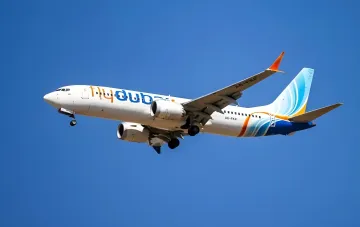
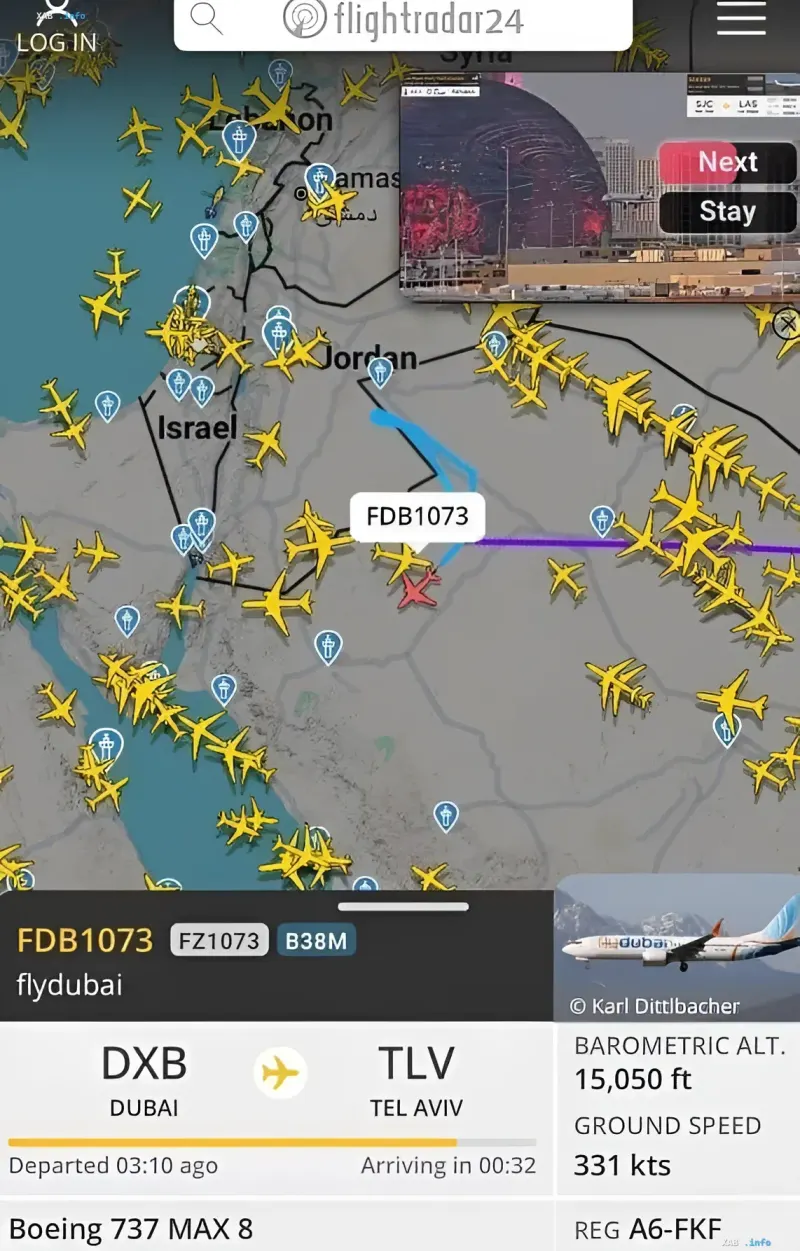
A morning Flydubai flight from Dubai to Tel Aviv triggered massive panic and the emergency scrambling of Israeli Air Force jets. The Boeing 737 MAX 8 passenger airliner, carrying roughly 150 people on board, unexpectedly transmitted an international code indicating unlawful interference with the aircraft before drastically altering its flight path.
Incident Chronology and Air Force Response
While in Jordanian airspace, the aircraft's crew activated transponder code 7500, universally recognized by air traffic controllers worldwide as an aircraft hijacking. Prior to this, the flight had briefly transmitted a general emergency signal. The airliner rapidly lost altitude and changed course toward Saudi Arabia, heading for Tabuk Airport to make an emergency landing.
Contradictory Data
While official Israeli media and specialized security services reported a technical malfunction on board and a pilot error when entering emergency codes, various Telegram channels actively promoted a radically different narrative. Several outlets claimed the sharp maneuver was caused by a fierce fistfight between the pilots mid-flight. Official aviation experts completely refuted the rumors of an internal crew conflict, dismissing them as an emotional hoax.
Expert Analysis and Consequences
Experts agree that the false alarm was the result of human error under extreme stress. While attempting to manually switch instruments to the general emergency code 7700 due to technical glitches, the pilots likely triggered the adjacent register by mistake. The incident ended safely, yet it vividly demonstrated the extreme tension in the Middle Eastern skies, where any technical glitch is instantly interpreted as a direct military threat.